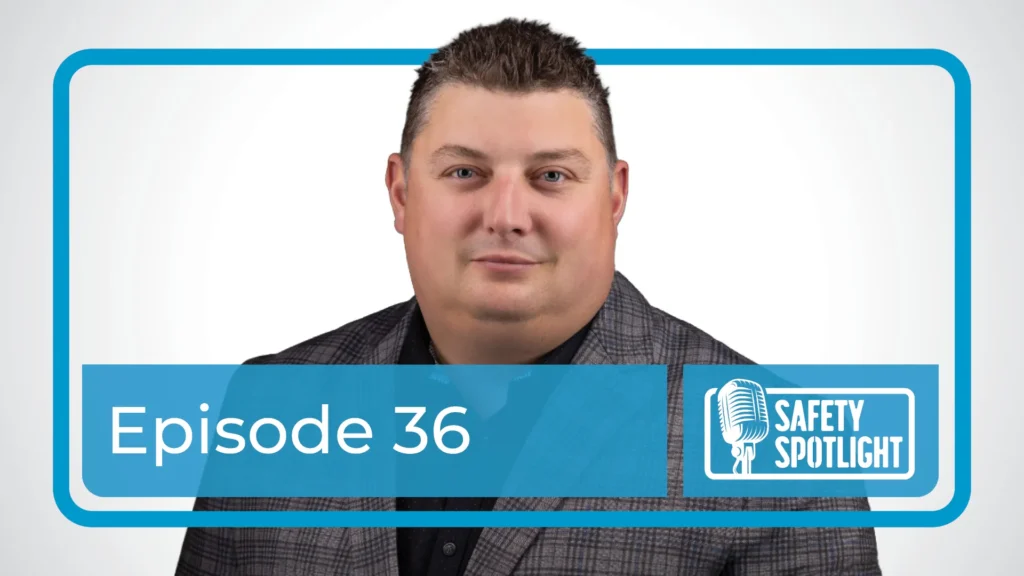
Ask most organizations how safety is going and they will hand you their incident numbers. Cody Woolf would rather know what happens on site when the senior leaders aren’t there.
Cody didn’t come to safety the usual way either. He went to school for law enforcement and criminal justice, then spent his early career in commercial vehicle enforcement with the Alberta government, pulling vehicles over on the highway and learning to have difficult conversations quickly. A friend moved into the safety world in 2008 and made it sound interesting enough that when a company offered to train him, he took the job with a plan to return to policing if it didn’t work out. Seventeen years later he has worked across civil and commercial construction, industrial, and now oil and gas and petrochemical, and he still says he has learned more from the workers in the field than from any course he has taken or book he has read.
In this episode of The Safety Spotlight, Cody makes the case that a clean record and a strong culture are two different things. He carries a line from his current mentor, that the absence of an incident doesn’t mean the presence of safety, and he is blunt about the alternative explanation: sometimes an organization is getting lucky. What closes that gap, in his view, is presence. Leaders in the field, conversations instead of emails, and follow-up that workers can actually see.
What we get into:
Boots on the Ground, Literally: Cody means work boots, worn by safety leaders, vice presidents, and CEOs. He talks about the difference between showing up to police a crew and showing up to listen to one, and why the first visit often gets read as the former.
The Corrective Action Email That Changes Nothing: An incident happens, the actions get written, a strong email goes out, and the team feels like it nailed the fix. Cody explains why that is where the work starts rather than ends, and why he goes to the field to help implement a corrective action instead of directing it from a desk.
AI Doesn’t Measure Empathy: Photo-to-hazard-assessment tools and risk prediction software are arriving, and Cody is interested in what they could streamline. He is also candid about his one worry, which is that a generated risk assessment becomes a reason to skip walking the job as a team.
Fit for Duty Includes the Mind: Fit for duty has long meant drugs, alcohol, and physical readiness. Cody argues the psychological side belongs in that same policy, points to mental health first aid training for frontline supervisors, and puts a direct question to organizations: what are you doing about it?
Slow Down Before You Change Anything: Asked what he would tell himself on day one, Cody says stop trying to prove yourself with change. Learn the organization and the culture that already exists, earn the trust of the people doing the work, and then start adjusting.
If you manage a strong safety record, prequalify contractors, or lead a crew in a safety-sensitive industry, this conversation is a useful check on whether your numbers are telling you about your systems or about your luck.