
BIS Safety Software Canada

Sell Yourself First: Garrett Hill on Why the Safety Message Follows the Person


Prefer To Watch?
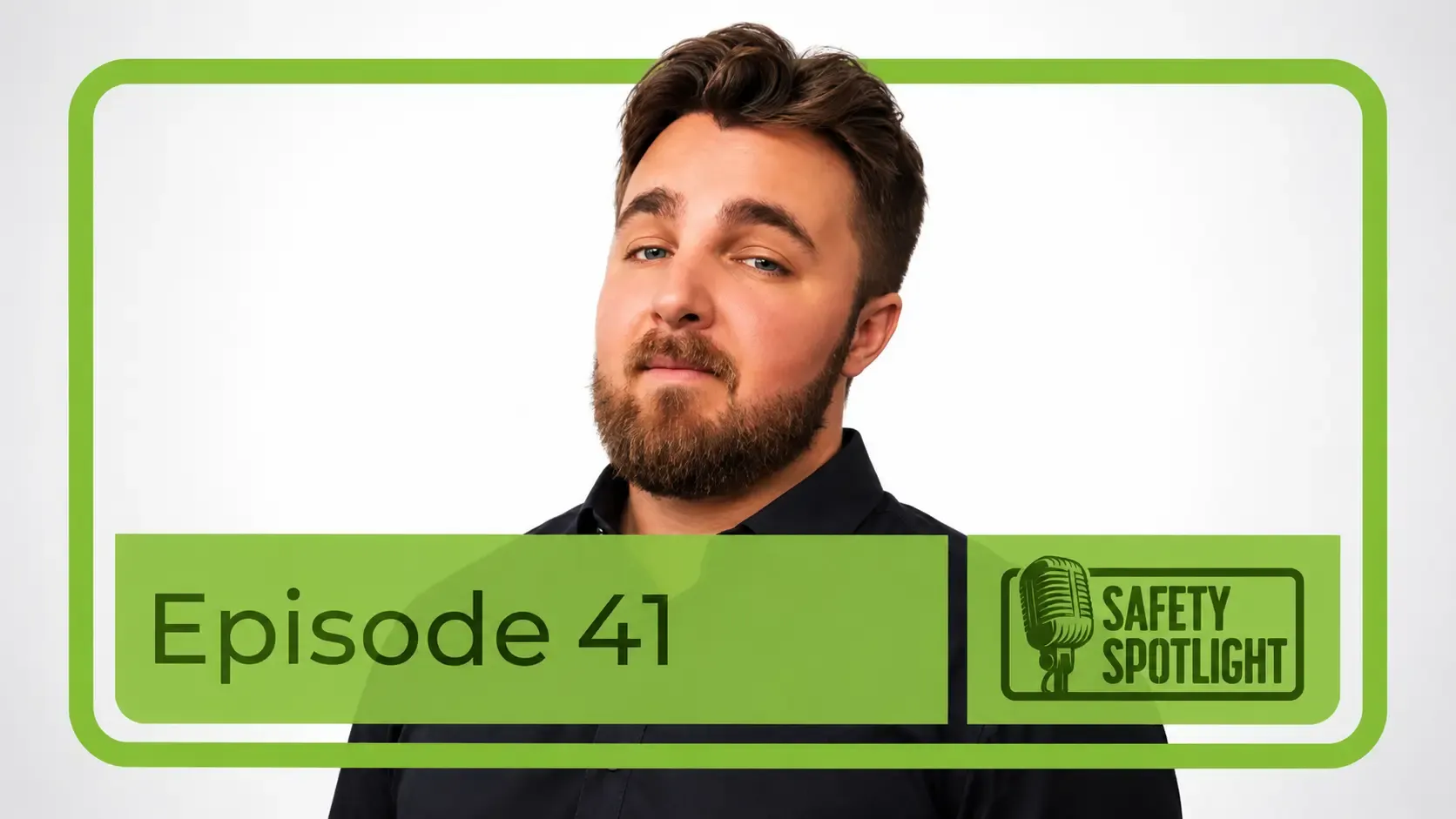
Garrett Hill

“The biggest factor in building a safety culture and being a great safety manager is selling yourself. If the people you work with don’t like who you are, the message you send will never get out.”

Garrett Hill has spent the better part of ten years in safety. He started on high-rise demolition sites in Houston and is now a Regional Safety Manager at EquipmentShare, where he has about 106 offices to support and spends much of his time on the road across the Gulf Coast. He also teaches the OSHA 10 and OSHA 30 courses. When he took his first safety job, an OSHA 30 was all he had.
 
His path into safety started with a family decision. After his time in the Navy, his father gave him a choice: work under him in general industry, or go work with his uncle and learn safety. Garrett picked safety, expecting it to be the easier of the two. “Boy, was I in for a ride,” he says. His first role was site safety for a crew of about 80 people, a job he called “the adult babysitter.”
 
For his first three years, Garrett thought he had safety figured out. Then, about three and a half years in, he was given his first safety manager position, and it showed him how much he still had to learn. He had never put a health and safety program together or written a set of SOPs, because all of his experience had been boots on the ground. “I could talk the talk, but I didn’t know how to walk the walk at the time,” he says. Each step up the ladder felt the same way: “You open the book and you realize there are 36 more chapters.”
 
Garrett says safety was “absolutely a means to the end” for his first five years, and that the fear of failing pushed him more than passion did. The passion came once he found his niche and saw how much more the work could be than the set of rules he had first taken it for. “Safety now for me is teaching, it’s talking, it’s conversing with everybody,” he says. “I constantly preach about how safety is a conversation.”
 
He brings the same approach to the offices he supports. On a visit, he talks with the general manager, the service manager and the techs, and he rides along with the drivers. “These audits that we’re supposed to do, it’s not just a checkbox on a piece of paper for me,” he says. In his words, “If I’m going to be invested in something, I have to know who I’m investing in.” The purpose behind it is getting people home to their families, and he constantly talks about “10 fingers and 10 toes.”

This conversation breaks down:

  • How a choice his father offered after the Navy led Garrett into safety
  • The “36 more chapters” moment that came with each step up the safety ladder
  • The two lanes Garrett sees in safety, and why he moved from living by the book to supporting operations
  • Why engagement with a crew has to come before the message
  • Keeping a new-hire safety orientation engaging for 200 to 350 people at a time
  • What moves a safety culture from moderate to strong
  • Avoiding burnout in a role that doesn’t stop at five o’clock
  • How to bring a problem to a mentor, and why you shouldn’t show up empty-handed
     
Early in his career, Garrett worked in the first of two lanes he now sees in safety: the safety professional who “lives and breathes the book and thinks safety above all is always the case.” He learned the hard way that, from that lane, the message struggles to get through. Today he works from the other lane, where “safety is a support to the operations teams,” and he finds operations managers respond much better to it. He still believes safety should be driven first, and the difference is in how he talks about himself and the culture. “You have to sell yourself and then you can sell the message,” he says. Once crews know him, he adds, “I’m not just the safety guy. I’m Garrett.”
 
Once crews are engaged, Garrett says he has seen high-risk jobs come through with no big incidents or accidents. He also reminds safety professionals that workers don’t arrive wanting to get hurt. “I’ve never met a person in my life who wants to hop on a job and go, I’m gonna get injured today,” he says. Complacency creeps in, so his job is to put the overlooked risks back in front of people and bring the answers along with the questions. Marc compares that role to a good pair of glasses, and Garrett agrees: “You are the pair of glasses.” Being approachable also means people call him early when something on site looks wrong, before it turns into a major issue.
 
Garrett compares building a strong safety culture to “chiseling a lovely piece of art,” adding, “I’m no artist, but in a way, maybe I am.” It takes a program, then engagement and buy-in, then the consistency that keeps a site from sliding back into complacency. At EquipmentShare, he has led the new-hire safety orientation for the past two years, which means keeping 200 to 350 people on a single call engaged through three and a half hours of safety content. He does it by delivering the material in consumable pieces. In Garrett’s view, the jump from a moderate culture to a strong one comes down to consistency and follow-through. “I can write you a program today that would work for whatever task or job you’re doing, but if you’re not willing to follow through with it, everything I wrote is useless.”
 
The first incident Garrett handled, on a big site in Gainesville, Florida, left him with no answers. A worker slipped on scaffolding, hit the side rail hard and thought he had cracked his ribs. “I think I was huffing and wheezing more than he was,” Garrett says. When the general contractor asked whether he had “this, this, and this,” Garrett had nothing, so he called his boss and asked what to do. Ten years on, he brings his boss and his mentors the question along with his own proposed solution: “Hey, this is the question I’ve got. This is what I’ve come up with. What am I missing?” He trains the people he mentors the same way from day one, and his rule for them is to “never come empty-handed.” He has about 10 safety professionals he can call at any given moment, and he still calls his first mentor, his uncle, today.
 
Garrett is just as direct about protecting himself. In a role where the phone can ring at 2 a.m., a stretch in emergency services for an environmental company showed him that working with no real time off drives you into the ground, and he says it was a lesson he had to learn through failure. Now his phone goes almost silent after five o’clock unless there’s an emergency, and he makes time for the gym, friends and a good meal at his favourite place in Houston. “You cannot live and breathe safety 24 hours because it will decimate you,” he says.
 
Asked what he would tell himself ten years ago, Garrett returns to the idea he opened with. He would have learned sooner how to sell himself and be more open-minded about safety, which he believes would have taken him “ten times farther” in his career. The young safety professional who called his boss from Gainesville with no answers now takes those calls himself, from people he mentors at other companies.

If you are early in your safety career, or you are working out how to get crews to buy in to the safety message, this episode is worth your time.

Other Podcasts