


KEY TAKEAWAYS
- The award is decided by a confidential vote of OHS professionals across Canada. There is no judging panel.
- COS’s profile centres on our voice-driven hazard assessment tool, which interviews the worker and fills in the form for a final check.
- The AI rollouts that hold start with one practical win: a form off paper that people can see working.
A vote cast by the people doing the work
Readers’ Choice works differently from a juried award. COS compiles a list of vendors and suppliers to the OHS community, readers cast confidential ballots in an online survey, and the nominees with the most votes in each category receive the designation. Nobody pitches a panel.
Safety software gets used on a shift, with gloves on, by someone who has three other things to do. A vote from those people is the one we wanted. Marc Hurtubise, our safety insights lead and host of The Safety Spotlight, puts it this way to COS: “Something can look right on paper and still fall apart the moment a crew has to use it. The people doing the work are the ones who decide that, because they are the experts on how the work actually gets done.”
A form that interviews the worker
The magazine’s profile centres on a voice-driven hazard assessment tool built for the conditions where a form on a phone breaks down: cold weather and gloves, with a screen that will not register a tap.
Dan MacDonald, our CEO, describes it to COS: “They hit a button and it says in the earbuds, ‘Hey, it looks like you’re filling out a hazard assessment form. Tell me what happened.'” The assistant runs the interview, fills in the form as the worker talks, and hands it back for a final check. Asked to sum up what it does, Dan says, “It interviews them like a safety officer.”
Luke Koop, our head of product, points COS to the AI Form Assistant as the clearest example. The worker describes an incident by typing, speaking or photographing the scene. The assistant fills in the fields and flags what is missing, and the record stays in the worker’s hands:
- Every field the assistant touches is flagged for the worker to review before submission.
- Any change it proposes needs the worker’s explicit sign-off.
- The final call on every report belongs to the person who was there.
The worker knows the job better than the software does, and they make the final call on every report. What the tool does is shorten the distance between what they know and what ends up on the record.
Luke Koop, head of product, BIS Safety Software, to Canadian Occupational Safety
The change started inside the company
Dan tells COS the hard part of the last two years was behavioural. The technology was the easier half. Instead of handing down a mandate, the company put two people on the floor whose only job was to help the team change how it worked.
“We hired two AI adoption specialists who sat down with everybody on the team and said, ‘Show me what you do in your day,’ then taught them a better way to do it,” he says. “Some people started taking projects home on the weekends just to build things and show us what AI could do. We gave those people raises and celebrated the wins. It’s a big team effort and everything the team has accomplished is kudos to them.”
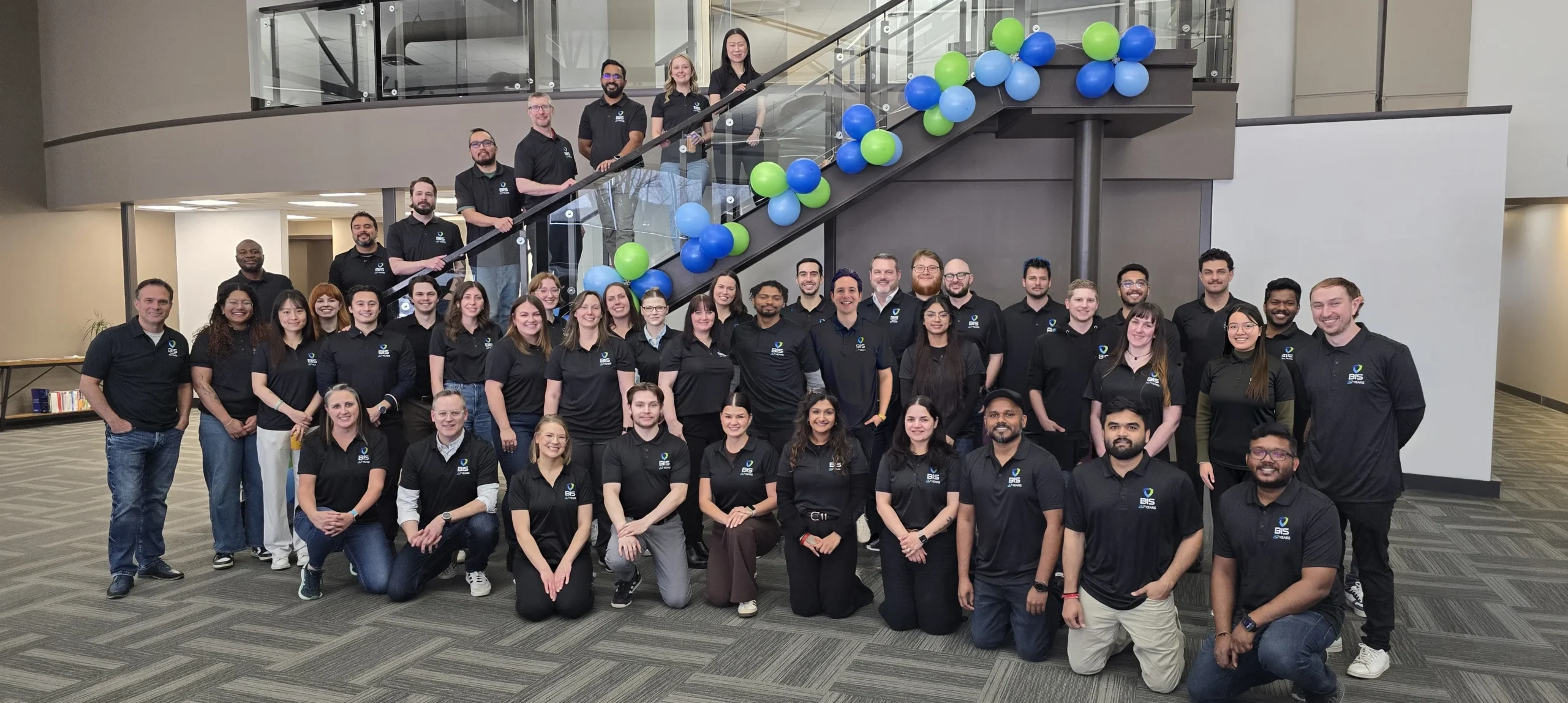 The BIS Safety Software team.
The AI rollouts that hold
Marc Hurtubise has spent the past year and a half interviewing safety leaders across mining, fleet, construction, healthcare and heavy industry for The Safety Spotlight. When he asks what technology is changing the job, the answers are about the task it took away. “People connect to AI when it fixes a problem they already had,” he tells COS. “Before that, it’s a word they keep hearing.”
Luke sees the same pattern from the product side. “The instinct is to demonstrate the most advanced thing the platform does, because that’s what looks good in a room,” he says. “The rollouts that hold start with the practical wins first. Get one form off paper, let people see it worked, and you earn the right to the more interesting capabilities by first proving the tool is on their side.”
What comes next
Dan does not expect AI features to impress anyone for long. “It’s now expected,” he tells COS. “It’s like it’s about time and almost ‘Okay, thanks for catching up.'” The next step he describes is agentic AI, where the platform carries out the work itself: importing a spreadsheet, building a form, adding a user, without a person walking it through each step.
Thank you to the safety professionals who voted, and to the customers who put our software in front of their crews every day.
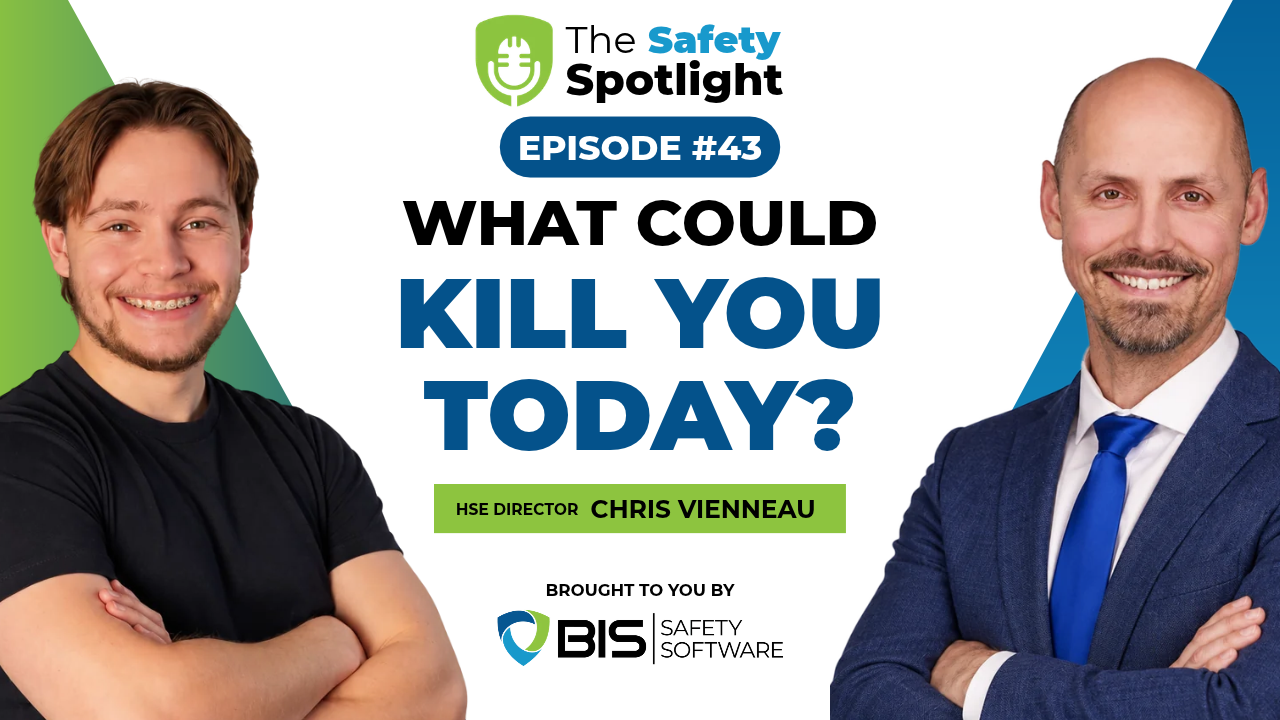
Chris Vienneau of Clark Builders explains how crews are trained to spot the hazards that could kill them, sharing lessons...

Discover Brian’s approach to workplace safety, from identifying hazards and documenting risks to building practical competence and learning from real-life...
Jason Ross of Bird Construction shares how a panic attack on a winter highway in northern Manitoba led him to...