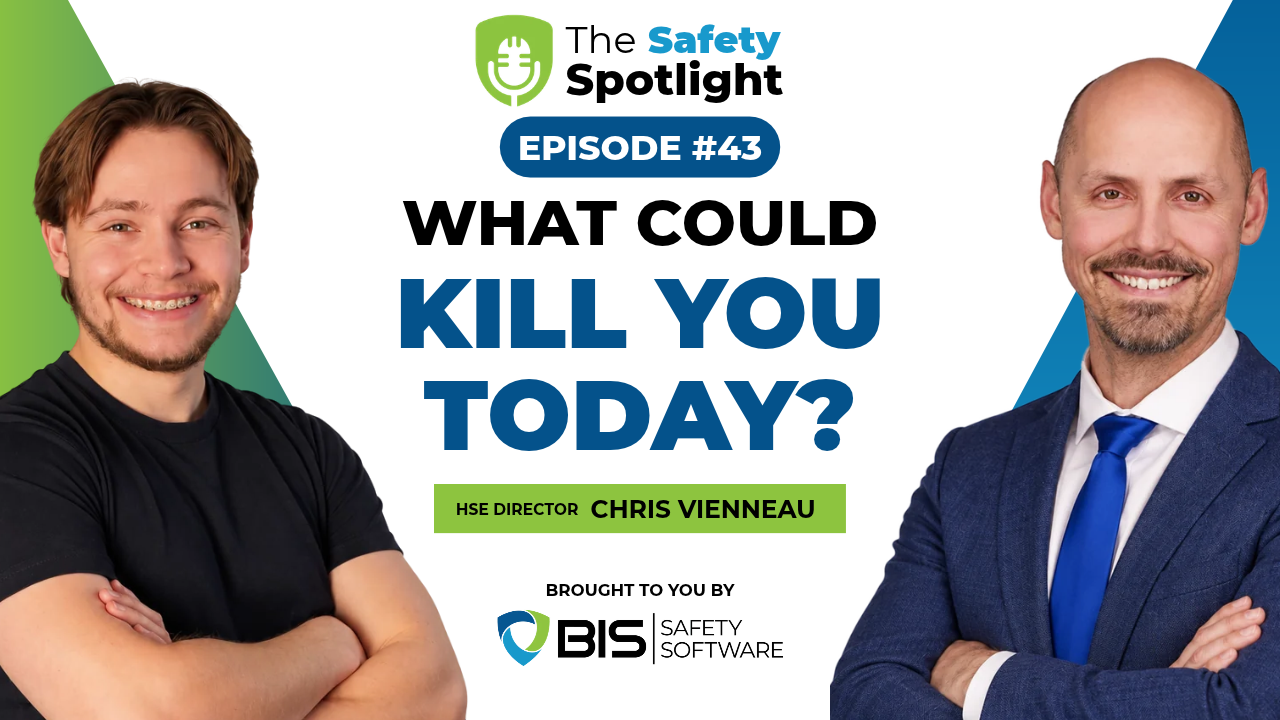
– Why moving up in safety means shifting from doing to leading, and why he finds that more rewarding than his own wins
– The move from compliance to culture, and why Clark wants its safety professionals acting as coaches and facilitators rather than officers
– How firefighter training changed the way he sees construction, an industry where you can stop the bad thing before it happens instead of responding after
– Clark’s Absolutes, and the question crews are asked during pre-task planning about what on site could kill them
– The mountain-climbing analogy he uses to explain critical controls, and the gorilla video Clark uses in training to show how life-threatening hazards get missed
– How to keep complacency out of a program that is already performing well, without burning people out on change
– Why leadership’s response to failure decides how much bad news you will ever hear
Chris’s central point is that a plan written at the base of the mountain will never anticipate everything the climb throws at you. “You can’t foolproof mountain climbing,” he says. What you can do is set anchors so that a fall is never fatal. At Clark, those anchors are critical controls for high-risk work, and if they are not in place, the work does not go ahead. Verifying them is shared between the worker and their supervisor, and the goal is to give crews room to make an error safely. “It’s possible that you may suffer an injury, but you will not suffer catastrophe.”
He is just as direct about what happens to a strong program that stops pushing. Change fatigue is real, and forcing too much at once overwhelms people, but you also cannot ease off, because “safety doesn’t work if it’s not relentless.” The same thinking shapes how Clark handles recognition. So many safety conversations only happen when something needs fixing that Chris makes a point of celebrating people for doing the right things, through draws, milestone announcements and shout-outs at town halls.
You will also hear how Chris coaches safety professionals to guide workers to their own solutions instead of handing them the answer, why he believes good mentorship means you eventually stop being needed, and where he sees AI and robotics changing how jobsites are monitored for risk. He closes with the one thing he wishes someone had told him in his first year as a safety manager: if you want people to use a system, it has to be simple.
If you lead a safety team, are moving from the field into management, or are trying to work out why your crews keep missing the hazards that matter most, this episode is worth your time.
You can find Chris on LinkedIn, and learn more about Clark Builders’ approach to safety on their website.