
- Home
- Company Spotlights
- Leading With Humanity: Megan Scott on Building Safety That People Trust
Leading With Humanity: Megan Scott on Building Safety That People Trust
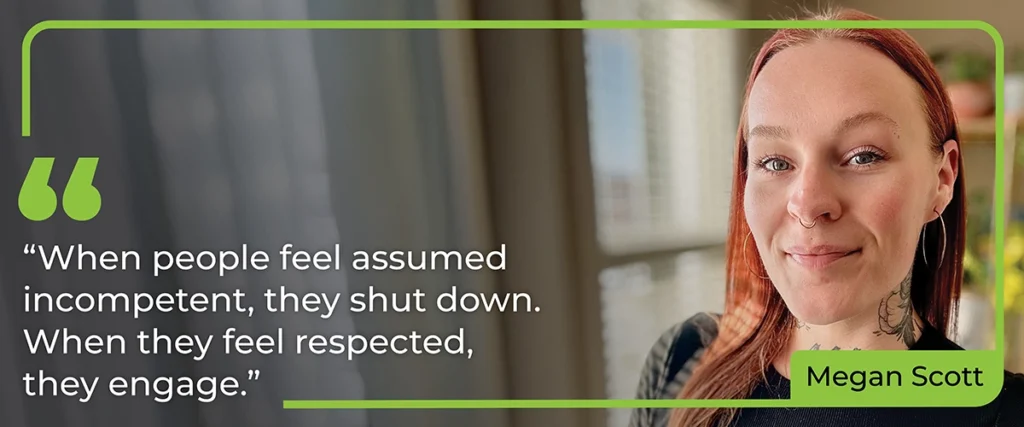
In workplace safety, credibility is not earned through policy binders or perfectly worded legislation. It is earned through trust, listening, and a genuine commitment to people. Megan Scott understands this deeply.
According to the International Labour Organization, more than 2.7 million workers globally die each year from work-related injuries or illnesses, underscoring the human stakes behind every safety decision.
With more than 13 years of hands-on safety program management experience across multiple industries and provinces, Megan has built her career by meeting workers where they are, not where regulations assume they should be. That people-first mindset continues to shape her work at Artis, where her approach challenges a long-standing misconception in safety: that enforcement alone creates safer workplaces. For Megan, safety works best when it starts with people.
“Safety isn’t about enforcing legislation,” she says. “It’s about taking care of people and getting them home to their families.”
An Unconventional Start in Safety
Megan’s path into safety leadership didn’t begin with a formal title or degree. Like many safety professionals, it started when responsibility landed on her desk unexpectedly.
In fact, industry surveys consistently show that a large percentage of safety professionals enter the field indirectly, often after being assigned safety responsibilities alongside another role.
Early in her career, Megan worked as a site administrator for an industrial painting company, managing safety documentation for a major construction project. When she later moved into a non-safety role, an upcoming audit forced the company to confront a gap. Their safety lead was gone, and no one had been maintaining the program.
At just 21 years old, Megan stepped in.
With no formal education in safety at the time and little guidance, she rebuilt and managed a COR-aligned safety program spanning three provinces. Over the next decade, she learned the work from the inside out. Through audits, incident management, program development, and direct engagement with crews.
COR programs have been linked to measurable reductions in injury rates and workers’ compensation claims across multiple Canadian jurisdictions.
“That sink-or-swim experience taught me more than any classroom ever could,” Megan says. “I need real-world context to understand safety. Theory alone doesn’t stick.”
Shifting From Enforcement to Advocacy
Like many safety professionals, Megan began her career in what she calls the “legislation enforcer phase.” She quickly learned that this approach created resistance, not results.
Workplace incident investigations frequently show that rigid, punitive approaches discourage hazard reporting rather than preventing incidents.
“People don’t connect with rules,” she explains. “They connect with purpose.”
Over time, her philosophy shifted. Safety became less about compliance and more about care. Less about authority and more about accountability rooted in trust.
Her focus now centers on dignity, fairness, and inclusion. Values shaped not only by her professional experiences, but also by seeing how poor management and unchecked power can harm workers.
“I’ve seen people treated as replaceable,” she says. “That doesn’t align with my values. Everyone deserves to feel safe, respected, and heard at work.”
As a mother, the stakes feel even higher.
“I couldn’t imagine my child losing a parent because an employer ignored a maintenance issue or dismissed a concern. That’s what drives me.”

How Megan Builds Buy-In on Site
One of Megan’s most effective tools is deceptively simple. She listens first.
When she arrives on site, she doesn’t lead with corrections or checklists. She asks workers to walk her through what they’re doing, step by step.
“I want them to explain their process before I say anything,” she says. “It shows respect and gives me context.”
Only after understanding the work does she weave legislation into the conversation, identifying gaps without undermining experience.
“It’s the difference between barking orders and having a conversation,” Megan explains. “When people feel assumed incompetent, they shut down. When they feel respected, they engage.”
She also emphasizes relationship-building. Knowing names, remembering families, and showing genuine curiosity about the work creates trust that no policy ever could.
The Real Challenges in Safety Leadership
For Megan, the hardest part of safety isn’t the workers. It’s management buy-in.
Multiple regulatory investigations have shown that management decisions are the most common root cause in serious workplace incidents.
“Workers usually want to participate,” she says. “They have opinions, ideas, and real insight. The resistance often comes from leadership teams who see safety as optional.”
Many companies, she notes, are willing to pay for manuals or audits, but hesitate to engage meaningfully. Treating safety as a box to check rather than a responsibility to share.
This disconnect creates risk. Not just operationally, but legally.
“Safety isn’t optional,” Megan says. “It’s governed and enforced like the law, because it is the law.”
Another hard truth she has learned is that not everyone can be convinced.
“Some people just don’t care,” she says plainly. “And you can’t save everyone.”
Accepting that reality, while still advocating fiercely for workers, is one of the most difficult lessons in the profession.
Defining Success Through Growth and Trust
Some of Megan’s proudest moments don’t come from audits passed or claims avoided, but from relationships built and programs that last.
As a consultant, she has helped companies implement custom, company-specific training programs that are still in use years later. Training designed not to satisfy requirements, but to reflect real job demands and real accountability.
She has also led large-scale safety software implementations and rebuilt safety cultures that were previously disengaged.
“The best feedback I get is trust,” she says. “When clients hand over their program and say, ‘We know you get what we do.’”
That trust, she notes, reignited her passion for safety after burnout nearly drove her out of the field.

What Makes a Great Safety Leader
For Megan, the answer is clear.
A good safety leader listens first.
Technical knowledge matters, but real-world experience matters more. Emotional intelligence is essential, but it must be balanced with the ability to put facts over feelings when necessary.
“You have to care deeply about people,” she says. “But you also need common sense and integrity.”
Most importantly, safety must fit operations, not fight them.
“Safety isn’t about forcing people to change everything they do,” Megan explains. “It’s about understanding what they already do and filling in the gaps.”
Advice for New Safety Professionals
Megan encourages those entering the field to rethink the narrative they’ve likely been told.
“People love to say safety is a thankless job,” she says. “That hasn’t been my experience.”
Her advice is simple. Be patient. Be curious. Be adaptable.
“Safety isn’t a cookie cutter,” she says. “You need to mold it to the organization, not the other way around.”
Looking Ahead: The Future of Safety
Megan sees progress in the industry, particularly in the growing emphasis on psychological safety, inclusion, and worker participation.
Psychological safety has been linked to improved hazard reporting, stronger safety culture scores, and reduced incident severity across multiple industries.
She also believes harmonizing safety standards across provinces, and eventually internationally, could significantly improve outcomes.
Technology will play a role, but she’s clear about its limits.
“AI can track documents and flag updates,” she says. “But it can’t replace human connection.”
Instead, she’s most excited by innovations that reduce physical strain, improve recovery, and quietly make work safer without adding burden.
“Good safety shouldn’t feel like extra work,” Megan says. “It should make work easier.”
A Human-Centered Legacy
Megan Scott’s approach to safety is grounded in one belief. People are not expendable.
By listening first, respecting experience, and weaving legislation into real-world operations, she demonstrates what modern safety leadership can and should look like.
“Safety is about being a teacher and a mentor,” she says. “If people understand why it matters, they’ll protect themselves and each other.”
And that, more than any regulation, is what creates safer workplaces.
Related Articles

Discover Brian’s approach to workplace safety, from identifying hazards and documenting risks to building practical competence and learning from real-life...

Jason Ross of Bird Construction shares how a panic attack on a winter highway in northern Manitoba led him to...

Garrett Hill shares why crews take in the safety message once they know the person delivering it, and what ten...