
Why it matters on the job
Across Canada’s bush lines, mountain corridors, and northern sites, bears are part of the operating environment, not a remote possibility. Staying safe isn’t about fear; it’s about reading conditions, planning routes, and responding confidently if a bear appears.
Read the landscape first
Bears leave clues. Treat sign reading like any other field inspection.
- Tracks and trails: Size, stride, and freshness hint at species and timing.
- Scat and feeding sign: Berries, digs, or carcasses signal nearby food sources.
- Trees and rubs: Fresh claw marks or hair indicate recent travel routes.
If the sign looks fresh, change your plan, adjust your path, tighten spacing, and increase noise to avoid a close encounter.

Season and setting change the risk
Behavior shifts with time of year and local conditions.
- Spring: Protective sows with cubs; food is scarce, movement rises.
- Summer: Feeding intensifies near water, berries, and alpine meadows.
- Fall: Heavy foraging before denning; bears range farther and take more risks.
- Disturbance factors: Burn areas, fish runs, drought, or poor berry years can concentrate activity.
Bake these realities into your pre-job brief and hazard assessment, not as a footnote, but as a primary exposure.
Prevent encounters with simple controls
Make avoidance your default.
- Work as a team: Pairs or small groups improve visibility and response.
- Be heard: Regular call‑outs, radio checks, and noise in thick cover reduce surprises.
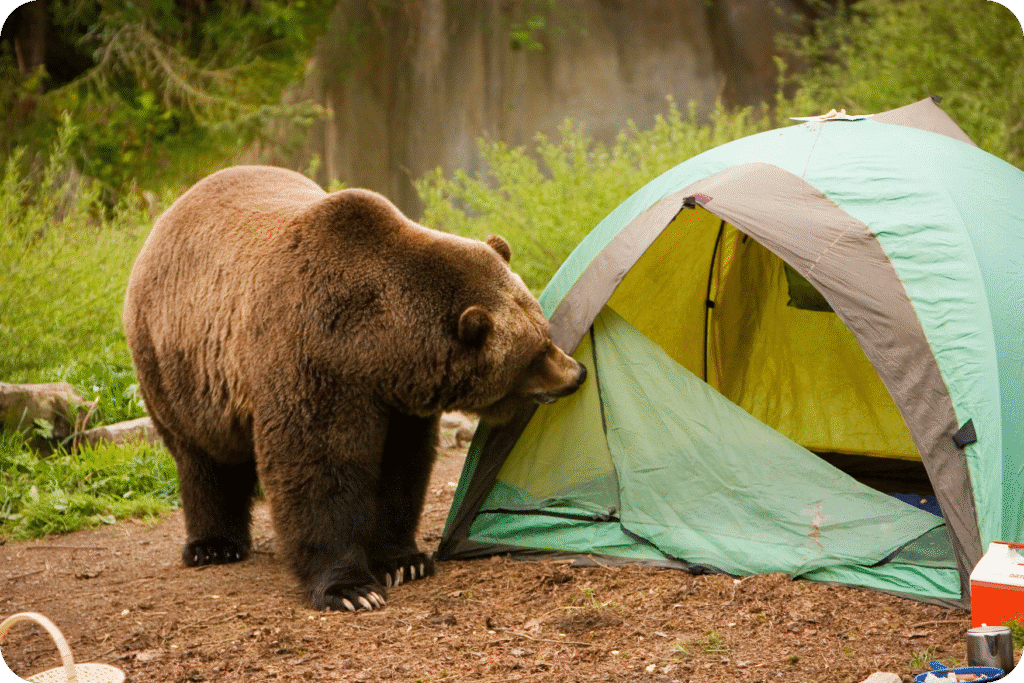
- Control attractants: Keep food and garbage in bear‑resistant containers; never store snacks in sleeping areas.
- Design your footprint: Separate cooking, storage, and sleeping; maintain clear egress routes; stage vehicles for a quick exit.
Before you settle in, ask: “Would this setup draw a bear here?” If yes, change it.
Match your response to behavior
Not all encounters are the same; your actions shouldn’t be either.
- Defensive (surprised, with cubs, guarding food): Speak calmly, avoid eye contact, back away slowly, give space.
- Curious/testing: Stand your ground, look bigger, group up, have spray ready.
- Predatory cues (stalking, silent direct approach): Be assertive, stay together, use spray if needed, and use other deterrents.
Decide and commit, mixed signals (step forward, then run) can trigger a chase.

Bear spray: stage it, practice it, trust it
Spray only works when it’s accessible and familiar.
- Carry on your body: Chest harness or hip holster; never buried in a pack.
- Rehearse: Practice draws and aim with an inert can; understand wind and effective range.
- Maintain: Replace before expiry; heat and cold degrade performance.
Treat spray like any lifesaving tool, checked, ready, and second nature to use.
Build wildlife risk into your workflow
Make bear awareness part of the standard safety system.
- Pre‑task briefs: Note recent sign, seasonal factors, and route choices.
- Hazard assessments: Document attractant controls, regroup points, and comms.
- Check‑ins: Set call times and escalation triggers; identify dead zones.
- Learning reviews: Record where sign was found, what changed, and what to adjust tomorrow.
When wildlife is integrated, crews act earlier and more consistently.
Training makes the difference
Instinct helps, but scenario practice builds judgment and speed. Crews need hands‑on learning to spot sign, adjust routes, and deploy spray confidently under stress. The goal is a measured response, not hesitation.
Bottom line
The best bear encounter is the one avoided. Read the land, adjust early, and keep controls simple and repeatable. If you do meet a bear, match your response to its behavior, use your tools well, and exit safely. Preparation isn’t alarmist, it’s professional.
Equip your team with BIS Safety Software’s bear safety training that covers sign recognition, site layout, and encounter response then embed those practices into pre‑job briefs and hazard assessments so they stick.
Related Articles

Discover Brian’s approach to workplace safety, from identifying hazards and documenting risks to building practical competence and learning from real-life...

Jason Ross of Bird Construction shares how a panic attack on a winter highway in northern Manitoba led him to...

Garrett Hill shares why crews take in the safety message once they know the person delivering it, and what ten...