BIS Safety Software Canada

Free webinar, Nov 25: Practical AI in Safety with Ashley Mckie. Save your spot →

Making Safety Simple

Facebook
LinkedIn
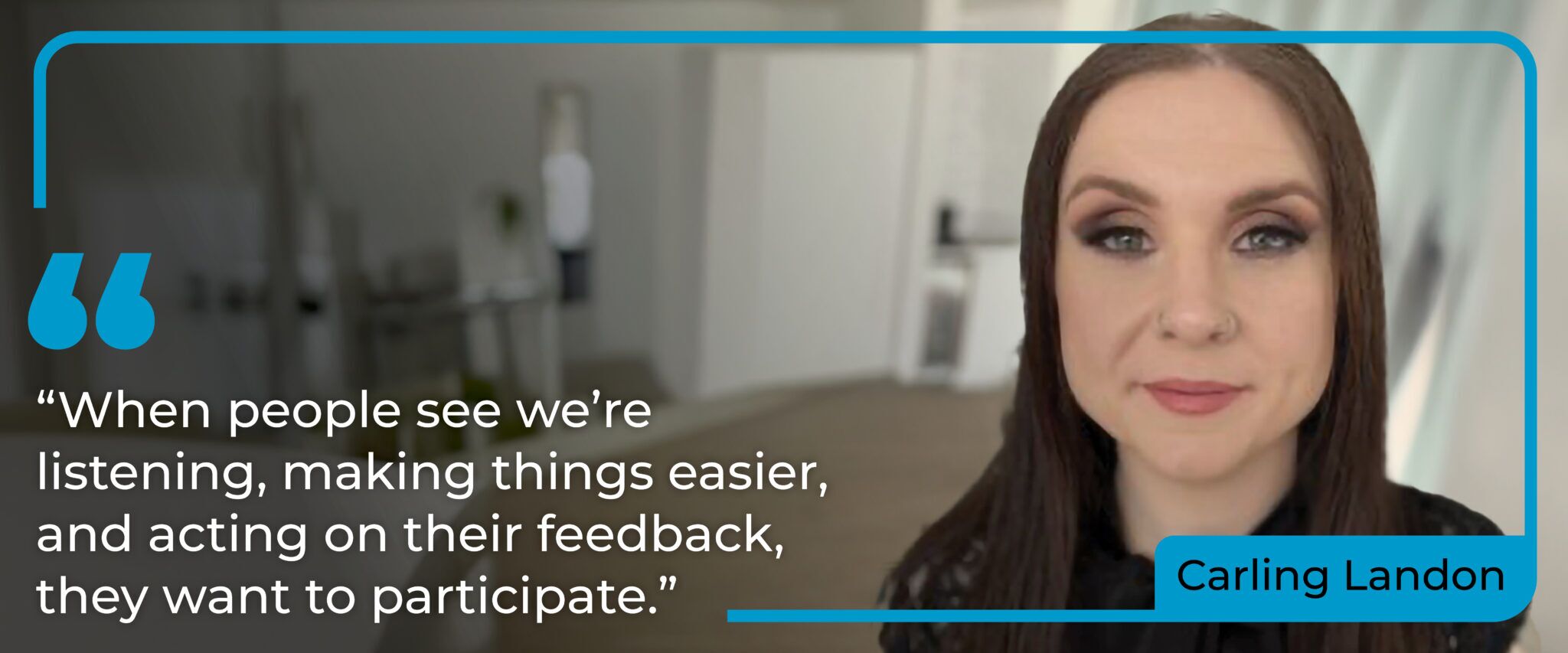
Carling Landon Quote from Spotlight Articles

Carling Landon never imagined she’d be the one shaping how safety feels at work. At 21, thinking next steps, her husband suggested safety.  

She started taking courses and working jobs that gave her experience. She kept building and excelling until it became a career. 

Ten years later, Carling is the Health and Safety Manager at Driving Force. Beside her is Gift Avwomakpa, her trusted advisor, who came to safety by way of nursing. 

“I was bored of doing the same thing over and over,” Gift says.  

“Health and safety was hard at first, but once I finished my program, I realized I could take it anywhere. It was a challenge, and I liked that.” 

Together, they are reshaping how safety feels at work; removing intimidation, earning buy-in, and turning compliance into a conversation. 

From Complexity to Clarity

When Carling first joined Driving Force, the safety program was a maze. 

“It was intense. Even the people who used it daily struggled to navigate it,” she says. “We were retraining constantly, spending 40 hours a month just to get people through the same steps.” 

The problem wasn’t the workers. It was the system. 

“It wasn’t designed with the end user in mind,” Carling explains. “You had to go from A to Z, then back to B, it just didn’t flow.” 

So, they stripped it back, step by step, removing unnecessary procedures, simplifying checklists, and making everything mobile-friendly. 

The result? 

“Employees love it,” Gift says. “They can do meetings and inspections on their phones, take pictures, attach them, submit. They don’t need me to walk them through it anymore. They even call us to say how much easier it is.” 

The Power of Buy-In

Carling points out that safety lives or dies with front-line workers. 

“If we don’t have buy-in from boots on the ground, we don’t have a program,” she says. 

That’s why she and Gift see themselves as support, not police. 

“Health and safety already has a reputation for catching people doing something wrong,” Gift explains. “Our job is to fix the system, not blame the person. If the program works, people can do their jobs safely.” 

That mindset shift is turning “why should I?” into “why not?” 

“When people see we’re listening, making things easier, and acting on their feedback, they want to participate,” Carling says. 

Small Wins, Big Impact

The payoff of this approach has been tangible. 

Buy-in is up. Meetings and inspections are getting done. Issues are spotted and solved faster. And corporate no longer feels like it’s chasing branches to stay compliant, instead, branches are running the program themselves. 

“It’s like a flywheel,” Carling says. “Once they saw the program get easier, they were on board. Now when we come up with a new idea, they’re more willing to try it because they trust we’ll make it work for them.” 

Building for the Future

Carling and Gift aren’t stopping here. 

Next, a major focus on orientations. Another area where workers have struggled. They plan to simplify, document, and standardize the process before tackling other program elements one by one. 

They’re also committed to testing new ideas by keeping what works, discarding what doesn’t, and trying again. 

“Sometimes there’s a swing and a miss, sometimes a swing and a hit,” Carling says. “The key is to keep going.” 

Safety That Works

For Carling and Gift, safety is about making things easier, not harder, and creating a program workers actually want to be part of. 

“People are engaged,” Gift says. “They see that we’re in it with them.”

The result is a safety culture that’s no longer feared, it’s embraced. 

Keep it Simple 

Build trust 

Adapt the Plan