BIS Safety Software Canada

Free webinar, Nov 25: Practical AI in Safety with Ashley Mckie. Save your spot →

  • Home
  • Blog
  • From the Couch to the Plant Floor: Dr. Tom Krause on Looking Beyond Behaviour Based Safety
From the Couch to the Plant Floor: Dr. Tom Krause on Looking Beyond Behaviour Based Safety
Facebook
LinkedIn
A workplace safety consultation explaining behavioral safety concepts to employees, bridging psychology and systems thinking.

A single year, a dramatic shift: incident rates cut by roughly forty percent when Dr. Tom Krause fused applied behavior analysis with Deming-style systems thinking, two disciplines rarely combined in safety at the time. The impact was immediate, yet many organizations still treat this approach as optional rather than essential. The missed opportunity isn’t the science; it’s the rigor to use it fully.

From Clinic to Shop Floor: A Pivot with Purpose

Krause began in clinical and experimental psychology, far from plants, pits, and production lines. That changed when a manufacturer, technically competent but behaviorally inconsistent, asked for help. They had procedures but not alignment. The simple admission, “we understand the technical, not the behavioral” sparked a synthesis: analyze behavior with the same seriousness used for systems, and anchor both in leadership decisions that shape context.

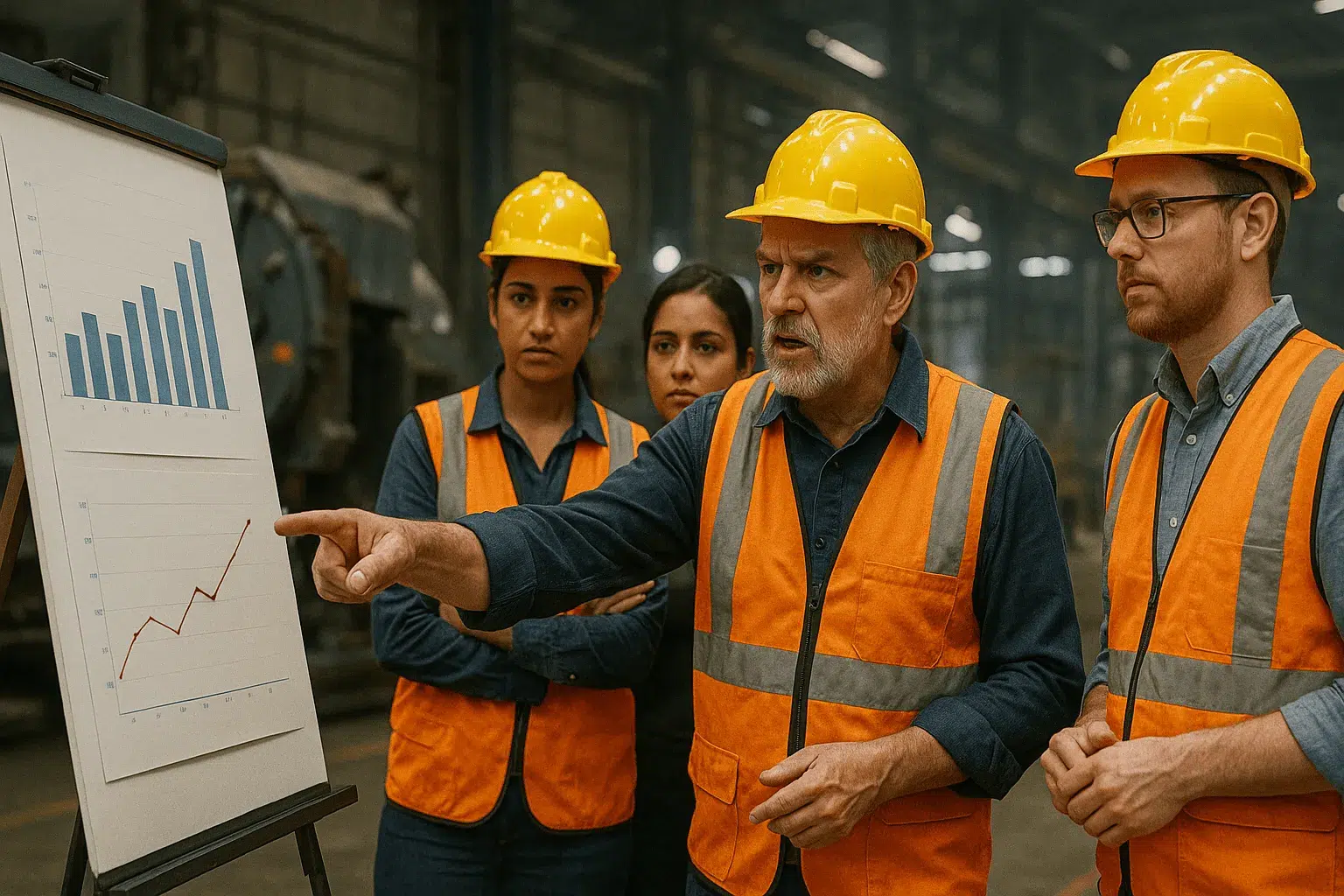
Supervisor explaining workplace safety trends to the industrial team during a plant floor meeting.

Where Traditional BBS Breaks Down

Behavior-Based Safety spreads quickly for a reason: it’s clear, observable, and actionable. Define critical behaviors, observe, measure, and give feedback. But many implementations stall because they stop too soon. The crucial move is the analysis of context, the drivers around the behavior: workload pressures, conflicting targets, social dynamics, incentives, and decision pathways. Without that fourth step, observation turns into judgment and metrics drift toward blame.

Leadership Sets the Conditions

No one can “will” a safer behavior into existence within a system that rewards speed over diligence or discourages speaking up. Behaviors are outputs of conditions. Those conditions, tradeoffs, priorities, and norms are created by leadership. When leaders investigate constraints, remove friction, and align consequences with desired outcomes, behavior changes without coercion. Skip this, and workers pay the price for system-level contradictions.

The Hidden Risk: Quitting at the Hard Part

Organizations often embrace the model until the work gets uncomfortable. Context analysis demands transparency, psychological safety, and willingness to change how decisions are made. It involves tough conversations about production pressure, resource allocation, and accountability at the top. That discipline builds durability; avoiding it erodes trust and freezes performance where it is.

The Takeaway

Serious improvement doesn’t come from more observation, it comes from understanding why behaviors occur and reshaping the conditions that produce them. That’s the leap Krause made, and it’s still the step most teams skip. If you want a culture that lasts, don’t stop at seeing behavior; explain it, then redesign the system so the safe choice is the natural one. That’s where enduring performance and fewer incidents begin.

Follow us!

Stay up-to-date with the latest spotlight articles, podcasts, the SafetyNET Magazine, or our book on Leadership for Safety Excellence. All updates will be shared on our social channels, click below to follow us.