
- Home
- Company Spotlights
- Building Safety Through Understanding
Building Safety Through Understanding
How Ethan Winder Turns Communication into Connection
The fundamental challenge in occupational safety leadership lies in turning policy into consistent, real-world practice. While many organizations focus on documentation and regulatory compliance, the strongest safety outcomes often come from a different approach, one rooted in authentic communication and human-centered leadership.
Ethan Winder’s career at Triple E RV reflects this philosophy in practice. His approach shows that a sustainable safety culture is built not through enforcement alone, but through understanding the work, empowering the workforce, and creating genuine dialogue across every level of the organization.
For Ethan, safety became more than a role. It became a way to connect people, prevent harm, and build trust. He believes safety is not just about rules or reports. It is about people.
“Safety isn’t just about compliance. It’s about showing people that their work and their well-being matter.”
That belief forms the foundation of his approach to safety leadership.
Learning the Work Before Leading It
Ethan began his career in the field, working side by side with the people he now helps protect. Those early years gave him perspective that before you can lead in safety, you must understand the work itself. He understood that people make decisions based on the pressures, realities, and limitations of their environment.
This understanding brought a sense of psychological meaningfulness, where people naturally take more ownership of safety when they feel their contributions matter.
“You can’t protect someone until you understand what their job really looks like. That’s where trust starts.”
That mindset became his foundation, aligning planning with practice and keeping people at the center of every policy.
Communication That Builds Trust
In fast-paced, high-risk environments, messages can easily get lost in translation. Ethan believes communication is the heartbeat of every safe workplace, built on genuine dialogue rather than one-way reminders.
“I’ve seen how quickly assumptions can turn into incidents. That’s why I make space for conversations, not just compliance.”
By keeping communication clear, respectful, and human, Ethan turns conversations into collaboration and collaboration into care.
Creating a Culture of Care
For Ethan, safety culture is built in small, everyday moments: a quick check-in, a shared laugh, or a word of appreciation.
He focuses on:
- Consistency in approach
- Respect for every voice
- Learning from mistakes instead of assigning blame
When something goes wrong, his leadership reflects a restorative mindset, to focus on conditions contributed to an issue rather than who to blame.
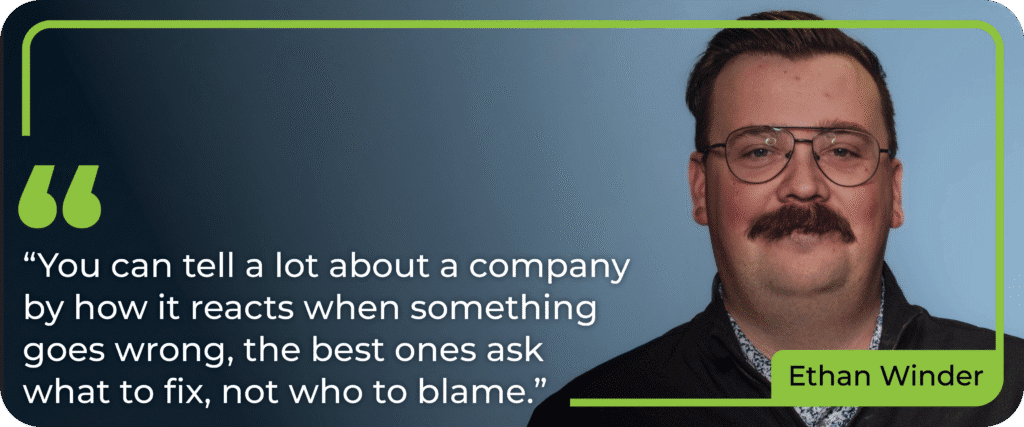
“You can tell a lot about a company by how it reacts when something goes wrong,” he says. “The best ones ask what to fix, not who to blame.”
That approach builds ownership, trust, and accountability across teams.
Training That Builds Confidence
Research has shown that standardized testing obstructs learning, Instead, instructors should focus on information that solves field problems and integrate content knowledge with real-world applications. Ethan sees this as an opportunity to connect with workers and build competence. His training sessions are practical and relevant and focus on real-world understanding rather than memorization.
“When training feels meaningful, people engage,” he says. “It’s not about memorizing steps. It’s about understanding why they matter.”
This approach brings field and office teams together, ensuring everyone stays informed, capable, and confident.
Leading with Integrity
For Ethan, integrity isn’t a gesture; it’s a habit. Safety decisions often come with pressure, deadlines, budgets, or other priorities. But he believes people remember the moments when leaders choose what’s right over what’s convenient.
This shows the value-based trust built when leaders demonstrate fairness and consistency in tough moments.
“The hardest decisions aren’t technical. They’re moral.”
Using Technology with Purpose
Ethan uses technology to enhance visibility and awareness, not to distance himself from the workforce. Digital tools help identify trends and potential risks before they grow, but he ensures human experience stays at the center.
This mirrors the idea of human-tech partnership, where tools support workers rather than overshadow them.
“Technology helps us see patterns. But it’s people who make safety real.”
Defining a Great Safety Leader
Ethan believes great safety leaders share three core qualities:
- Empathy: They listen before they lead.
- Integrity: They choose what’s right, not what’s easy.
- Curiosity: They never stop learning from others.
“Good leaders enforce the rules. Great leaders help people understand why they matter.”
Safety Starts with Listening
For Ethan, safety isn’t a set of rules to follow. It’s a conversation built on awareness and respect.
“Safety doesn’t live in a manual or a meeting,” he says. “It lives in the moments when someone speaks up and someone else listens.”
Because at the end of the day, what keeps people safe isn’t policy. It’s understanding, trust, and care.
“Safety starts with people, not policies.”
Related Articles

Discover Brian’s approach to workplace safety, from identifying hazards and documenting risks to building practical competence and learning from real-life...

Jason Ross of Bird Construction shares how a panic attack on a winter highway in northern Manitoba led him to...

Garrett Hill shares why crews take in the safety message once they know the person delivering it, and what ten...