

A new mine site does not inherit a training program. The jurisdiction is different, the regulations are different, the equipment is different, and the workforce mobilizing through the gate has a different mix of experience than the last project. Somebody has to build the curriculum from the ground up, and historically that took long enough that the site had already changed by the time the content landed.
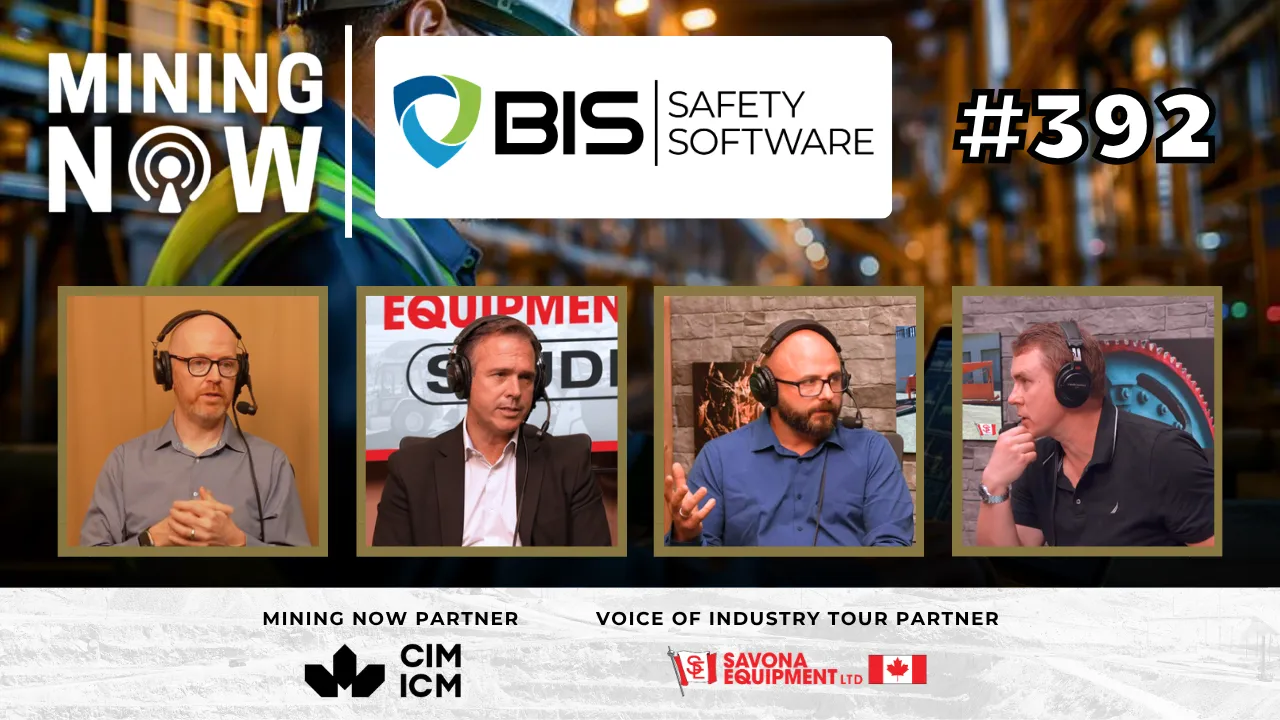
That gap is the through line of this Mining Now episode. Host Jared Downey sits down with Dan MacDonald of BIS Safety Software, Vincent Galati of BHP Jansen, and Mike Schwarz of MyZone AI to talk through what has changed in course development, what has not, and who still has to sign off.
Who is on the episode

Dan MacDonald
CEO, BIS Safety Software
Vincent Galati
Lead Training Specialist, BHP Jansen
Mike Schwarz
CEO, MyZone AI
KEY TAKEAWAYS
- Onboarding at a new site means building curriculum for that jurisdiction, that equipment, and that scope of work, not adapting the last project’s material.
- Faster course development changes what is affordable, which puts adaptive content, microlearning, and multiple languages inside a normal training budget.
- Review and accountability stay with people, and the panel is clear that neither one gets handed to the tool.
Onboarding is the real constraint at a new mine site
Jansen is a potash mine under construction in Saskatchewan, built around a production shaft and a service shaft roughly a mile underground, with a railyard, tailings management areas, and a port attached to it. Thousands of people move through the site on a consecutive basis during construction, and that population has to be sustained through commissioning and into operations.
Every one of those people needs pre-site access training, role-specific compliance, and credentials that connect downstream to permits, room bookings, shuttle bookings, and other business applications. That makes the training team the keeper of the record that determines who is allowed to do what.
That work starts earlier than most people assume. Contract formation, scope, schedule, and the applicable regulations all feed the initial training needs analysis before a shovel hits the dirt.
What changed in how courses get built
The old sequence was research, scripting, video production, voice talent, editing, and review, measured in months. The panel describes a different sequence now, one that starts from documents the organization already has.
Vincent describes AI as a tool in the toolbox, used when it solves a defined problem, and says it does not take over key decision making or accountability.
- Existing procedures, policies, and manuals go in as source material instead of being re-researched
- A proposed outline comes back for review and correction before content is written
- Questions, images, and narration are generated against the approved outline
- Additional languages become a build step rather than a separate project
- A person signs off at each stage, the same as with a manually built course
It doesn’t augment our key decision making and it doesn’t augment accountability either. Those are two key factors.
Vincent Galati, Lead Training Specialist, BHP Jansen
The knowledge that leaves with the retiring crew
A large share of what keeps a site safe has never been documented. It is experiential, it sits with people who have done the work for decades, and some of it carries the assumption that the way it has always been done is the way it should keep being done.
The panel’s answer is to bring subject matter experts into content development before they leave, capture what they know while there is still someone to ask, and hold it as material the organization owns rather than knowledge that walks out with a retirement.
In practice that means sitting down with the people retiring in the next few years, a couple of short structured interviews a month, and turning what comes back into microlearning that stays with the crew after the classroom.

Jansen will mobilize thousands of workers through construction and into operations, each needing site access training tied to their role.
Where the human still has to sit in the loop
Mike’s read is that as content becomes cheaper to produce, the risk moves from the cost of building it to the cost of not reviewing it. In mining, a course that is mostly right is still a course with wrong instructions in it.
He sees software itself getting easier to reproduce, while years of industry-specific data and the human review that keeps output accurate stay hard to copy.
Shadow AI is already inside most organizations
People are trying these tools whether or not their organization has endorsed a platform. The panel is candid about the exposure that creates, and about the vetting that belongs in front of it: where does the information go, what does it touch, does the tool train on it, and are the privacy settings verified before anyone turns it on.


Discover Brian’s approach to workplace safety, from identifying hazards and documenting risks to building practical competence and learning from real-life...

Jason Ross of Bird Construction shares how a panic attack on a winter highway in northern Manitoba led him to...

Garrett Hill shares why crews take in the safety message once they know the person delivering it, and what ten...

