BIS Safety Software Canada

  • Home
  • Blog
  • Gas Detection: Your First Line of Defence Against Hidden Hazards
Gas Detection: Your First Line of Defence Against Hidden Hazards
Facebook
LinkedIn
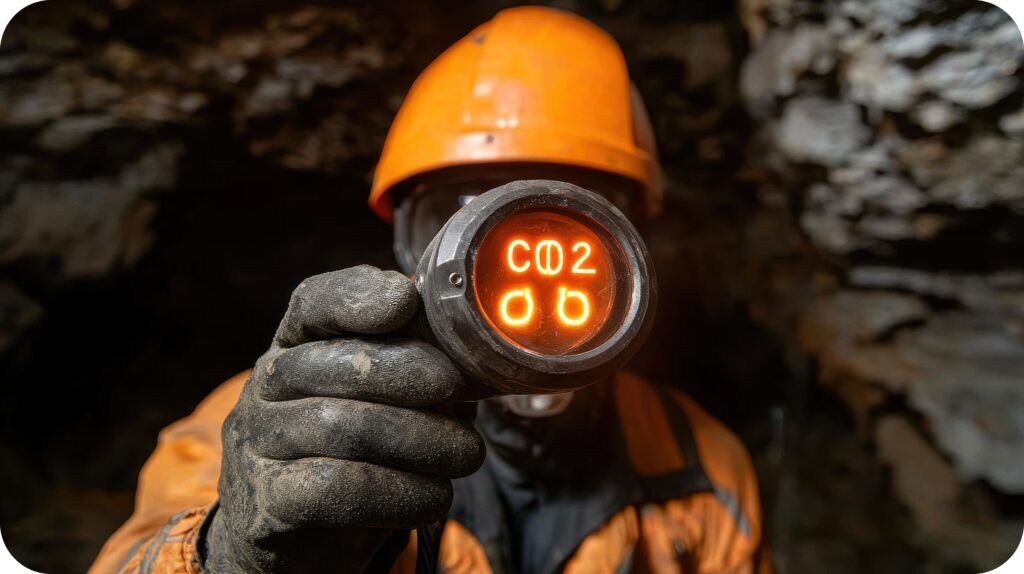
Underground worker showing a handheld meter with CO/CO2 readings to verify atmospheric conditions.

When it comes to workplace hazards, some dangers make themselves known: a loud bang, a slick floor, or the unmistakable smell of burning. Gases, on the other hand, can silently slide onto the scene right under (and into!) your nose, unnoticed. 

Gas exposure can silently harm over time or kill within minutes, sometimes in a space that looks perfectly safe. That’s why gas detection technology isn’t just a smart investment. It’s a lifeline. Gas monitors, in all their forms, save lives, but only if used correctly.

Technician in PPE using a portable gas monitor to sample around equipment for toxic or flammable gases.

Can We Rely on Human Senses Alone to Detect Hazardous Gases?

Many workers know that without technology, it is possible to walk unknowingly into a toxic, explosive, or oxygen-deficient environment. Just clipping on a monitor does not ensure your safety. For example, H₂S (hydrogen sulphide) sinks, but helium rises. A slow leak of any kind could make a space appear harmless one minute but become toxic the next. Knowing how and where to test is just as critical as having the monitor itself. 

That’s why proper training on monitor types and testing methods is essential for every worksite.

How Do I Select the Appropriate Gas Detector for My Worksite?

Ensure that your team is safe at every moment by properly identifying the hazards and supplying each person with the right tools. 

Choosing the right monitor for the job is not a simple task. Here are just a few examples to illustrate this point: 

  • Handheld testers: simple, no-power tools for quick, on-the-spot checks 
  • Electrochemical sensors: detect toxic gases like carbon monoxide and hydrogen sulphide 
  • Oxygen sensors: warn when oxygen drops too low or rises too high 
  • Catalytic bead sensors: detect flammable gases before they reach explosive limits 
  • Infrared (IR) sensors: use light to spot combustible gases in low-oxygen or dusty areas 
  • Photoionization detectors (PIDs): find harmful vapours and VOCs at very low concentrations 
  • Fixed, area, and personal monitors: provide constant gas monitoring for spaces and individuals 

The wrong monitor or device placement for the gas at hand won’t protect anyone.

Even the right monitor becomes useless if it is calibrated incorrectly or the alarm is accidentally muted. Regular zeroing, bump tests, and calibration keep detectors accurate and alarms reliable. Sensor drift, wear, and environmental factors can all throw off sensor readings, and proactive maintenance ensures alarms sound when they matter most.

How Can Training Enhance Gas Detection Safety?

Technology alone isn’t enough. Training prevents the human errors that cause gas detection failures. Without proper training, even the best equipment can be ignored, misused, or misunderstood. That’s why the strongest safety programs combine technology with training and culture. This combination gives workers multiple layers of defence against unseen risks.

Multiple pressure gauges on a plant pipeline used to monitor process conditions and potential gas hazards.

Ready to Master Gas Safety?

BIS Safety Software’s Gas Detection Safety Course covers all the topics mentioned above and helps your team master real-world testing, monitoring, and decision-making when it comes to proper gas detection. 

Knowledge saves lives. Don’t leave safety to chance: enroll your staff in BIS Safety Software’s Gas Detection Safety Course today!

Follow us!

Stay up-to-date with the latest spotlight articles, podcasts, the SafetyNET Magazine, or our book on Leadership for Safety Excellence. All updates will be shared on our social channels, click below to follow us.