
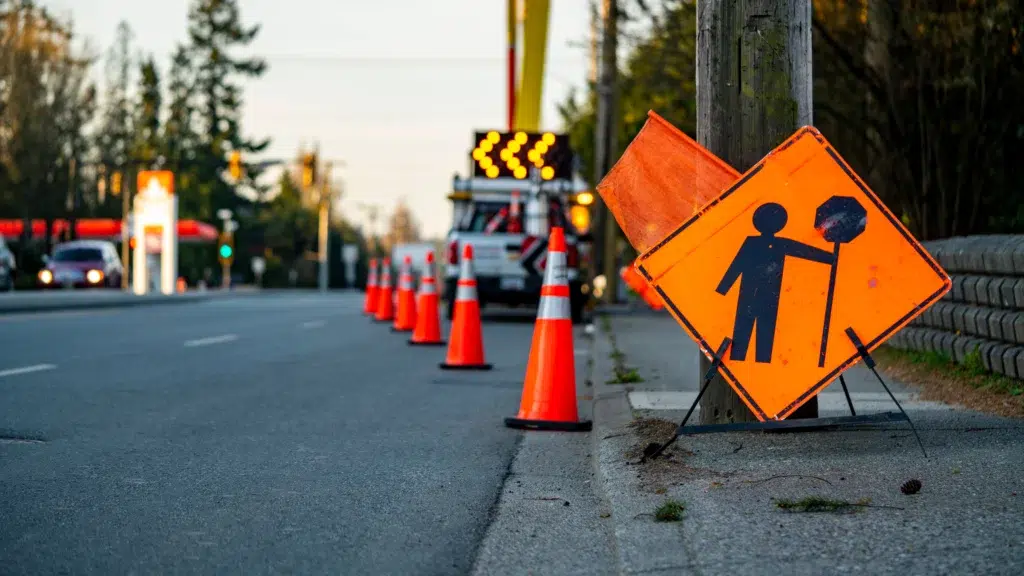
In every construction zone and maintenance corridor, vehicles weave past barricades, cones, and flashing lights, all while workers carry out essential tasks just metres away. The thread that holds this complex system together is traffic control.
Effective traffic control manages risk. Additionally, traffic control creates space for people to work, equipment to operate, and for drivers to travel safely through temporary disruptions. When done right, it’s the difference between close calls and everyone making it home safely.
The Person Behind the Signs
Traffic control begins with a plan but depends entirely on the people who bring it to life. Traffic Control Persons (also known as TCPs or flaggers) are the human interface between work zones and the travelling public. Their decisions can prevent a collision or defuse a situation before it becomes an incident.
A well-trained TCP is one who:
- Evaluates conditions
- Analyzes driver behaviour
- Applies control measures to constantly changing environments
A single distracted motorist or sudden weather change can alter risk in seconds, so TCPs must anticipate and respond accordingly.
Professionalism also plays a vital role. Courtesy and calm are as important as clear signals, especially when dealing with impatient or confused drivers. A composed TCP can reduce tension and maintain authority without confrontation, ensuring that respect and safety go hand in hand.

Communication: The Cornerstone of Safety
Clear, consistent communication is an essential part of safe traffic control. On any site, the ability to transmit, confirm, and act on accurate information keeps workers and drivers aligned. Two-way VHF radios, standardized call signs, and established terminology form the backbone of reliable communication.
For TCPs, positive communication (or, acknowledging every message) is a non-negotiable practice. It prevents assumptions, confirms traffic direction, and allows crews to adjust to new conditions instantly. Additionally, visual signals, air horns, and whistles serve as backups, ensuring redundancy even when technology fails.
Engineering Safety Through Intentional Design

Behind every sign placement and lane closure lies is a Traffic Control Plan. These plans are engineered responses to site conditions, designed to protect both the workforce and the public.
The plan determines how vehicles transition, where buffers exist, and how workers remain visible within the zone. It segments space into defined areas:
- Advance warning
- Transition
- Buffer
- Work
- Termination
Each areas serves a distinct safety function. Together, they create a flow that reduces confusion and maintains predictability for drivers.
Equally important is adaptability. Conditions shift, and effective teams must continuously evaluate and adjust layouts, signage, and communication patterns. In essence, traffic control is never static, but an evolving system that reacts in real time to human behaviour and environmental changes.
PPE and Presence: The Visible Barrier
Visibility saves lives. Across Canada, TCPs are required to wear high-visibility garments, CSA-approved safety boots, helmets, and eye protection designed for roadwork environments. These layers of protection make workers visible to drivers in all conditions.
Specifically, high-visibility clothing enhances perception distances, giving motorists the time they need to slow down. Similarly, reflective hard hats and coveralls extend visibility during dawn, dusk, and night operations, where perception errors are most likely. Being seen is being safe.
Innovation on the Road
Technology is changing the landscape of traffic control. For instance, Automated Flagger Assist Devices (AFADs) allow TCPs to manage stop/slow operations remotely, removing them from direct exposure to live traffic. These solar-powered systems use LED signals, mechanical arms, and radio controls to guide traffic with precision while still requiring a trained operator on site. AFADs don’t replace human judgment, instead they expand it, turning data and visibility into an extra layer of defence.
As these technologies become more common, they reinforce a central truth: safety innovation doesn’t happen in isolation. It evolves through collaboration between regulators, manufacturers, and the workers who rely on these tools every day.
Shared Responsibility, Shared Safety
Employers must equip crews with training, equipment, and supervision, while TCPs must stay alert, prepared, and professional. Drivers, in turn, must interpret signals, reduce speed, and respect the space that keeps others safe.
Every sign, cone, and slow paddle represents a shared promise: that everyone on the road deserves to go home safely. It’s a system built on trust between workers and drivers.
Keep the Road Safe, One Zone at a Time
The strength of a safety program is measured by how confidently its people can apply what they’ve learned when stakes are high.
Our Traffic Control for 2025 and Beyond Course equips your team to apply industry-recognized best practices, evaluate hazards, and control complex work zones with precision and professionalism. Let’s make every traffic zone a safe zone.
Related Articles

Chris Vienneau of Clark Builders explains how crews are trained to spot the hazards that could kill them, sharing lessons...

Discover Brian’s approach to workplace safety, from identifying hazards and documenting risks to building practical competence and learning from real-life...
Jason Ross of Bird Construction shares how a panic attack on a winter highway in northern Manitoba led him to...