

BIS Safety Software Canada

Richard Thorpe on Ignoring the Safety Fads
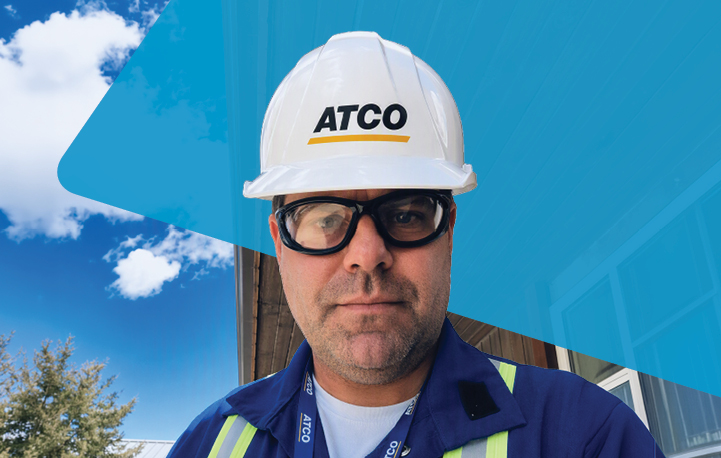
Frontline worker reviewing simplified safety procedures with a safety supervisor

Home Blog Richard Thorpe on Ignoring the Safety Fads By Jason Web Master Facebook LinkedIn Connect with Richard Thorpe on LinkedIn The ATCO safety supervisor is skeptical of the trends his profession keeps chasing, and quietly keen on the tools that help his crews get the basics right. “I’m probably the opposite of most in this space.” Ask most safety professionals what excites them about the field right now, and they will name a trend. Richard Thorpe names the opposite. He is a Supervisor of Health and Safety at ATCO, the Calgary-based energy and utilities company, and he came to the profession sideways. His first career was in security management, and at a fork in the road he chose safety over becoming a police officer. He holds his CRSP, the Canadian benchmark certification, along with his CHSC. He spent about 15 years as a technical specialist before moving into leadership four years ago. After two decades in the field, he is still looking for his next mentor, and he will tell you the industry’s latest breakthrough usually isn’t one. What Thorpe wants is unfashionable: do the fundamentals better, and stop chasing the next big thing. Skip the fads, master the basics What bothers Thorpe is the churn. The field, as he sees it, cycles through one focus after another. Behavior-based safety gave way to safety culture, then to safety leadership, then to psychological safety, each arriving as the thing everyone suddenly had to work on. Most of it, he argues, is the same old ideas under new names. “Most of them, they’re not new,” he says. The principle of not blaming the worker, for one, was in his OHS coursework 15 years ago. His objection is not that any single idea is wrong. It is that chasing them pulls attention off the unglamorous work that keeps people alive. “Nobody talks about doing the basics really, really, really well,” he says. Do that, back it with a real accountability system, and you are already ahead. Pressed on what the basics are, he does not hesitate. “What protects people? Well, it’s good hazard identification, recognition, and control.” What they don’t teach you The move into leadership caught Thorpe off guard. You spend years earning your designations and learning to be a safety specialist, he says. None of it prepares you for the different job of leading people. “They don’t teach you how to be a safety manager.” So he went and found the skills himself, and still points to a Dale Carnegie course as one of the most useful things he ever did. What he landed on has less to do with safety than with people. A good safety manager, he figures, works out what each person is good at and points them at it. “Not everybody is good at everything, and that’s okay.” Some are strong on process, some are strong with people, and the skill is knowing which is which. Need a deep investigation done right? Send the person with the track record. Need a hard conversation on a jobsite? Send the one who can build rapport and bridge the gap. Then back it with a real development plan, not just a list of goals. Keep it simple for the frontline For Thorpe, doing the basics well mostly means getting out of the worker’s way. He has been stripping his procedures down, using a method he calls usability mapping to cut the fluff and rewrite them at a grade eight reading level. “Do you really need a 20 page fall protection procedure when probably half of that can go?” he asks. A worker, the way he puts it, is really asking three plain questions: “what can hurt me, how bad can it hurt, and what can I do about it?” He judges every procedure and permit by whether it is suitable, adequate, and effective. This is where Thorpe, the fad skeptic, turns out to be no Luddite. Technology, unlike the trends, tends to win him over, because it can do the one thing a framework cannot: take the friction out of the basics. His hazard assessments now take dictation, so a worker can stand in a safe spot, talk the hazards out loud, and let the phone write them down. But a tool has to earn its place. He puts a new one to the same test he puts a procedure: does it help someone work safely, or just look modern? The ones that help, he adopts. The rest he treats like any other fad. For all his skepticism, Thorpe is not cynical about where any of this is going. He fully expects the digital tools to keep coming, and he wants his profession ready for them. But strip away the frameworks and the software, and the job is still the simple one the worker cares about: what can hurt me, and what do I do about it. Thorpe has just never been convinced that needs to be complicated.