Free webinar, Nov 25: Practical AI in Safety with Ashley Mckie. Save your spot →

BIS Safety Software
Rough Terrain (RT) Crane Safety
Learn rough terrain (RT) crane safety in this 60-minute online course: what an RT crane is, training and certification, anatomy and pre-shift inspection, site assessment, lift planning, load charts and safe operation. Earn a certificate when you pass.
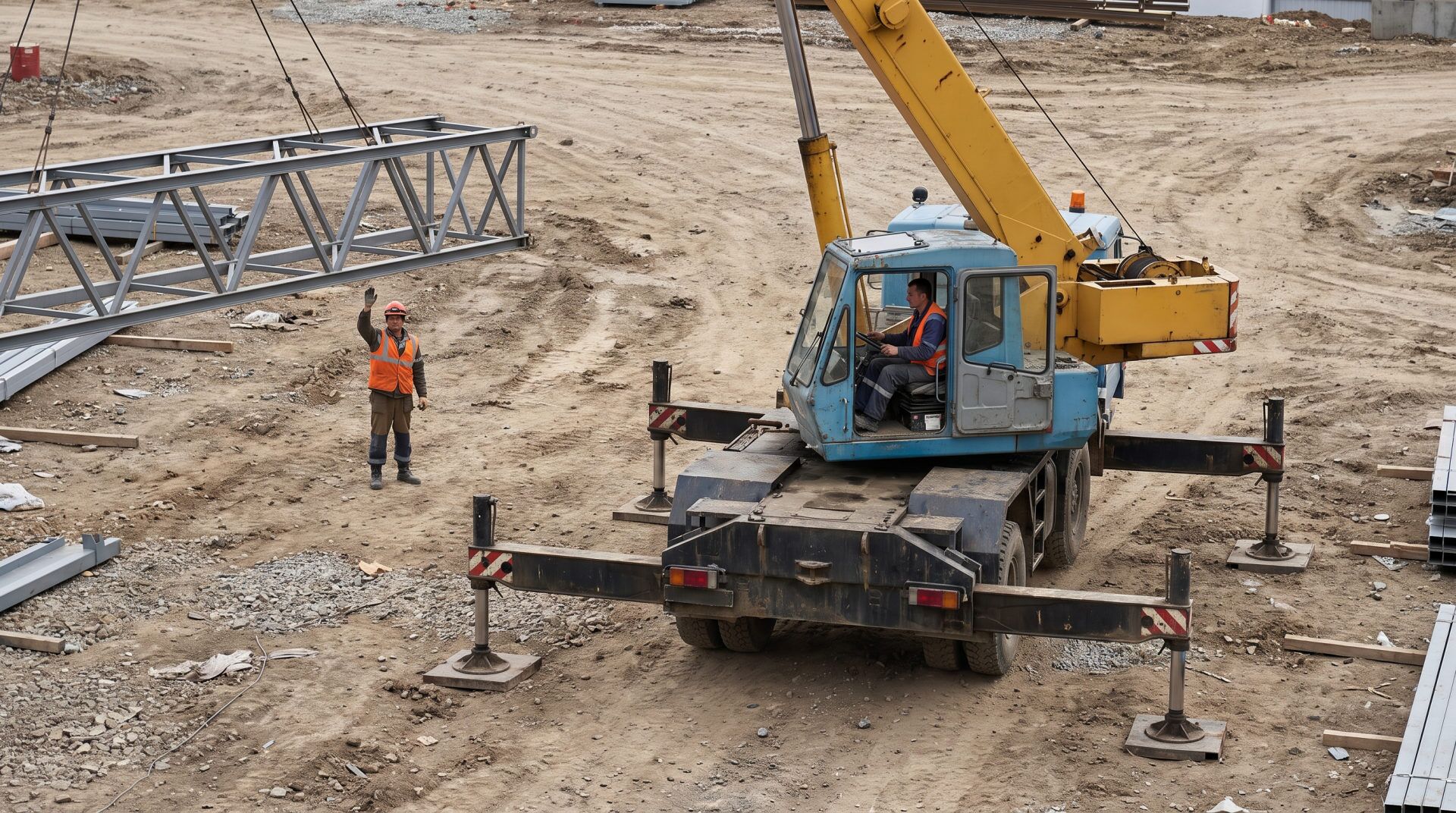
A rough terrain crane can tip, drop its load, or contact a powerline in seconds, and the operator who does not know the machine’s limits is the one who does not see it coming. This rough terrain crane safety course gives workers and supervisors the technical grounding to set up, signal, and operate RT cranes without putting a crew at risk.
The course covers everything from reading a load chart to deploying outriggers correctly and planning a critical lift. You finish with a verified certificate of completion and the knowledge to apply safe crane practices on any construction or industrial site.
Course Overview
This rough terrain crane safety course is built around learning modules that cover the full scope of safe RT crane operations, from machine fundamentals to hazard control. Each module follows the same sequence a competent operator uses on the job: understand the machine, assess the site, plan the lift, and execute it safely.
The topics covered are:
- What is a rough terrain crane?
- Training and certification
- Anatomy and pre-shift inspection
- Crane stability and load charts
- Proper setup, site assessment, and outrigger procedures
- Communication and standard hand signals
- Critical lift planning
- Recognizing and avoiding common hazards
Every module connects to a physical task or document you will encounter on site. You work with load charts, outrigger pads, and hand-signal exchanges, not abstract concepts.
Sixty minutes earns one certificate, with no guesswork on the ground.
What You’ll Learn
This rough terrain crane operator training covers the full operational cycle, from identifying machine components to making a stop-work call under pressure.
Machine knowledge and pre-shift inspection
- Identify the major components of a rough terrain crane and explain the role each part plays during a lift.
- Describe how pre-shift inspection findings affect the decision to operate or ground the crane.
Crane stability and load charts
- Describe the principles of crane stability and explain how load radius, boom angle, and ground conditions affect safe lifting capacity.
- Explain how to read and apply an RT crane load chart to verify that a planned lift stays within rated capacity.
Setup and site preparation
- List the steps for proper crane setup, including outrigger deployment and levelling, and explain why each step matters before a hook goes in the air.
- Evaluate site conditions, ground bearing capacity, overhead obstructions, and access routes as part of a structured pre-lift assessment.
Communication and lift planning
- Recognize standard hand signals used in crane operations and describe when and how each signal is applied.
- Describe the components of a critical lift plan and identify the information that must be confirmed before a critical lift begins.
Hazard recognition and avoidance
- Identify common crane hazards, including tip-over risk, dropped loads, and powerline contact, and explain the control measures that reduce each one.
- Apply a hazard-recognition process to a lift scenario and determine which conditions require a stop-work decision.
Assessment and completion
- Work through a graded assessment at the 80% pass mark to earn a certificate of completion you can submit as a training record.
Every outcome maps to a physical action, a document, or a decision you will make on site.
Who Should Take This Course?
- New RT crane operators. You are entering crane work for the first time and need structured technical grounding before you step into the cab.
- Experienced operators seeking a refresher. You want to confirm current practices, close any knowledge gaps, and add a dated certificate to your training file.
- Riggers and signal persons. You work directly alongside RT cranes and need to understand machine limits, hand signals, and critical lift requirements.
- Site supervisors and forepersons. You approve lift plans, oversee crane setup, and carry accountability when something goes wrong on the ground.
- Safety coordinators and trainers. You need a reliable, documented RT crane safety training resource to deploy across construction and industrial crews.
- Construction and industrial workers. You operate near RT crane activity and benefit from understanding hazard zones, load paths, and stop-work triggers.
Why Take This Course?
RT cranes operate in unforgiving environments. Uneven ground, congested sites, and variable soil conditions can shift a machine’s centre of gravity past the point of recovery. A tip-over or a dropped load is measured in lives and equipment, not paperwork.
Powerline contact is a leading cause of crane fatalities, and workers who cannot identify the hazard, calculate a safe approach distance, or execute a stop-work call may be exposed when a boom swings near an energized line. This rough terrain crane safety course addresses that gap directly.
A critical lift plan is not a formality; it is the document that forces every party to confirm ground conditions, load weights, rigging specs, and communication protocols before the hook leaves the ground. Workers who cannot read or contribute to that plan create risk for the entire crew.
A certificate of completion creates a verifiable record that you have been assessed against a defined standard, and that record matters when a regulator, an insurer, or a site safety coordinator asks for proof.
Key Benefits
- Certificate of completion included. You receive a dated, verifiable training record you can add to your personnel file or submit to a site safety coordinator immediately after passing.
- Tip-over and dropped-load risk reduced. Workers who correctly read a load chart and deploy outriggers to spec remove the two most common mechanical causes of RT crane incidents before the lift begins.
- Sixty-minute online format. You complete the full RT crane safety course in a single session from any device, with no travel, no classroom scheduling, and no lost shift time.
- Skills that transfer across sites and machines. Load chart literacy, outrigger procedures, and critical lift planning apply across RT crane models and most jobsites where rough terrain equipment operates.
- Priced at $99.99 per learner. A fixed, per-seat cost gives employers a clear training budget line and gives individual workers an affordable path to a recognized credential.
Course Details
- Duration: 60 minutes
- Format: Online, self-paced
- Pass mark: 80%
- Certificate: Certificate of completion included
- Price: $99.99
Frequently Asked Questions
How long does the Rough Terrain (RT) Crane Safety course take to complete?
The Rough Terrain (RT) Crane Safety course runs for 60 minutes and is designed to be completed in a single session.
What score do I need to pass the RT crane safety course?
You need a score of 80% or higher on the assessment to earn your certificate of completion.
Is a certificate included when I finish the rough terrain crane safety course?
Yes, the Rough Terrain (RT) Crane Safety course includes a certificate of completion, issued automatically once you pass the assessment.
Who should take this rough terrain crane safety training?
This course is designed for workers new to RT cranes and for experienced operators due for a structured refresher. Riggers, signal persons, site supervisors, and safety coordinators who work alongside RT crane operations will also benefit.
What does the RT crane safety course cover?
The course covers machine components and pre-shift inspection, crane stability and load charts, outrigger setup and site assessment, standard hand signals, critical lift planning, and common hazard recognition and avoidance.
How much does the rough terrain crane safety course cost?
The Rough Terrain (RT) Crane Safety course is priced at $99.99 per learner.
You can store and manage your team’s completed certificates using BIS Training Record Management, keeping every crew member’s documentation accessible when a site audit or regulator asks for it.
Enrol in the Rough Terrain (RT) Crane Safety course today and earn your certificate of completion in 60 minutes for $99.99.
Course Details
Course Length
This course will take roughly 60 minutes
Passing Mark
To pass this training course, you need to score 80% or higher on the quiz
Certificate
Upon the successful completion of this course a certificate with your name will be stored on your profile and available to print
Additional Training Courses

Concrete Truck – Operator Safety (OSHA)
This is a comprehensive OSHA-approved training program for Concrete Truck operators. The curriculum of this course meets OSHA's standards for the theoretical portion of...
Infection Control – Handwashing
This training course offers an essential introduction to hand hygiene practices, emphasizing their importance in infection control.
Change Order Management
In construction, changes are inevitable, yet if not correctly handled, they can lead to project disruptions, cost escalations, and schedule postponements. This course offers...