How AI is transforming safety training on mine sites. Read the article →

BIS Safety Software
Respiratory Protection
Learn respiratory protection in this 55-minute online course: respiratory hazards, types of respirators, proper fit, donning, user seal checks, inspection, replacing filters and cartridges, and cleaning and storage. Earn a certificate of completion when you pass.
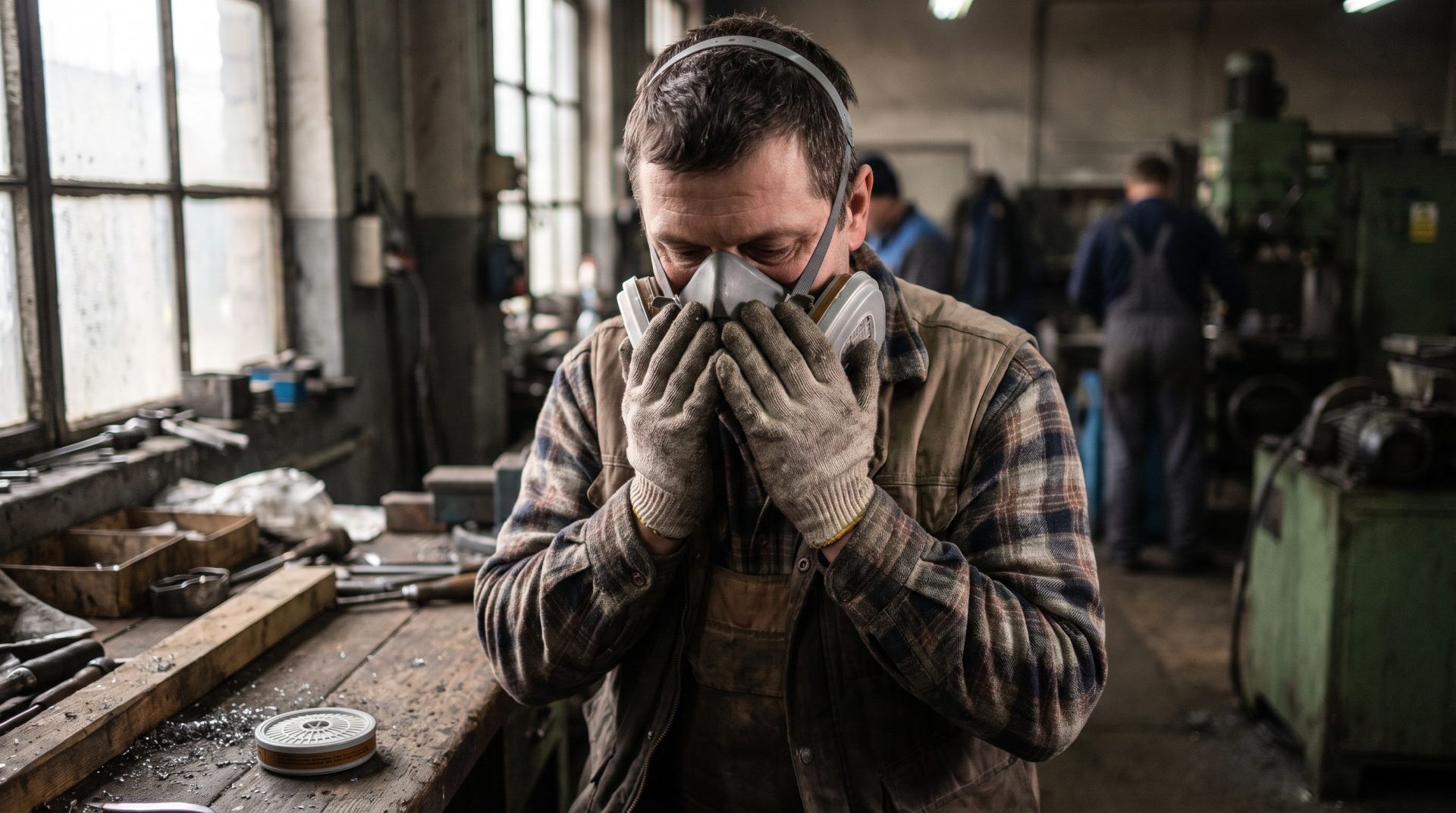
A respirator can only work as intended when it fits correctly, covers the right hazard, and stays in working condition. Getting any of those steps wrong means airborne contaminants reach your lungs while you believe you are protected. This respiratory protection training course provides a practical, step-by-step path through hazard identification, respirator selection, fit verification, and daily maintenance.
Workers in environments where airborne contaminants may be present can use this course to learn how to select the correct respirator, perform a user seal check before each shift, and keep equipment serviceable through proper cleaning and storage.
Course Overview
This respiratory protection training course is built around learning modules that address each stage of safe respirator use, from recognizing what is in the air to putting clean equipment back on the shelf. The modules are:
- Respiratory hazards
- Types of respirators and when to use them
- Steps for ensuring a proper fit
- Donning your respirator
- User seal checks
- Inspecting your respirator
- Replacing filters and cartridges
- Cleaning and storing your respirator
The course opens by grounding you in the actual hazards present in your work environment. Particulates, gases, vapours, and oxygen-deficient atmospheres each behave differently, and knowing which one you face drives every equipment decision that follows.
From there, the course walks through physical tasks in operational order. The course walks you through selecting the right device, achieving a verified fit, putting it on correctly, checking the seal before entering a hazardous space, and maintaining equipment through inspection, filter changes, and proper storage.
Pick it up, fit it, check the seal, and put it away right.
What You’ll Learn
This respiratory protection course maps each skill to a physical action you will repeat on the job.
Identifying respiratory hazards at work
- Identify the categories of respiratory hazards present in your work environment and describe how each type affects the body.
- Describe the conditions under which a given hazard category may call for respiratory protection alongside or instead of engineering controls.
Selecting the right respirator
- Distinguish between the available types of respirators and describe the specific workplace conditions that determine which type is appropriate.
- Identify the key differences between air-purifying and supplied-air devices so you can match equipment to the actual contaminant.
Fitting and donning your respirator
- Describe the basic steps involved in properly fitting your respirator and apply the correct sequence for putting it on.
- Apply the fit-testing process to confirm that a chosen respirator creates an adequate seal for your face.
Performing user seal checks
- Define what a user seal check is and describe the basic steps for performing both positive- and negative-pressure checks before each use.
- Recognize the signs of a failed seal check and describe the corrective steps to take before entering a contaminated area.
Inspection, maintenance, and storage
- Identify the basic steps for inspecting your respirator for damage or wear before and after each use.
- Describe the procedure for replacing filters and cartridges, including the conditions that indicate replacement is needed.
- Describe the steps for cleaning your respirator and storing it so it remains serviceable for the next use.
Assessment and completion
- Work through a graded assessment with a pass mark of 80% to earn your certificate of completion.
Right hazard, right device, right fit, confirmed every shift.
Who Should Take This Course?
- Workers in chemical or industrial environments. You may be issued a respirator as part of your standard PPE and want to confirm you are using it correctly.
- Painters, welders, and surface-treatment workers. Your daily tasks can generate fumes, particulates, or vapours that may require reliable respiratory protection.
- Construction and demolition workers. You may encounter silica dust, asbestos, or other airborne hazards on site, and a verifiable record of respirator training can support your compliance documentation.
- Maintenance and facilities personnel. You enter confined or poorly ventilated spaces where air quality cannot be guaranteed before you arrive.
- Health and safety coordinators. You oversee respirator programs and need a working knowledge of fit testing, seal checks, and maintenance procedures to manage them effectively.
- New hires and returning workers. You may be moving into a role where respiratory hazards are present, and a documented credential can show your training is current.
Why Take This Course?
A poorly maintained respirator is not protection. A cracked face seal, a saturated filter, or an incorrect fit lets airborne contaminants through while you work. The consequences range from acute respiratory injury to long-term occupational disease.
Some workers receive only a brief demonstration rather than structured training. Without formal instruction on hazard types, device selection, fit verification, and maintenance schedules, equipment gets worn incorrectly, inspected inconsistently, and stored in ways that shorten its service life.
This course closes that gap. You work through every operational step in the same sequence you follow on the job, so the procedure becomes repeatable and your equipment stays reliable across every shift.
Your training record needs to prove competence. Organizations that hold documented respirator training can give supervisors a verifiable record that workers completed training to a defined standard, which can be useful when incidents are reviewed.
Key Benefits
- Certificate of completion on the day you pass. A shareable credential goes straight into your training file the same day you finish the 55-minute course.
- Catch equipment defects before you enter a hazardous atmosphere. The course teaches the exact inspection and seal-check steps that identify a cracked seal or spent filter before it becomes a health event.
- Complete the full course in under an hour, from any device. Online respiratory protection training requires no classroom booking, no travel, and no shift coverage to arrange.
- The procedure stays with you long after the course ends. Because the course follows the same operational sequence you use every shift, the steps reinforce each other across repeated use.
- Fixed cost of $59.99 per enrolment. Organizations can budget this respiratory protection course for individual workers or entire teams without a volume commitment.
Course Details
- Duration: 55 minutes
- Format: Online, self-paced
- Pass mark: 80%
- Certificate: Certificate of completion included
- Price: $59.99
Frequently Asked Questions
How long does the respiratory protection training course take to complete?
The respiratory protection course runs for 55 minutes in total. You complete it at your own pace and can stop and resume from any device.
What score do I need to pass the respiratory protection course?
You need 80% or higher on the final assessment to pass and receive your certificate of completion.
Do I receive a certificate when I finish the respiratory protection training?
Yes, the Respiratory Protection training course includes a certificate of completion issued to every learner who passes the assessment.
How much does this respiratory protection course cost?
Enrolment is priced at $59.99 per learner, with no subscription or volume commitment.
Who should take this respiratory protection course?
Any worker who wears a respirator on the job is likely to benefit, including those in industrial, construction, maintenance, and chemical-handling roles. Safety coordinators who manage respirator programs will also find the course directly applicable.
What topics does the respiratory protection training cover?
The course covers respiratory hazards, respirator types and selection, fit testing, donning procedures, user seal checks, inspection, filter and cartridge replacement, and cleaning and storage.
Enrol in the Respiratory Protection training course today and earn your certificate of completion in 55 minutes.
Course Details
Course Length
This course will take roughly 55 minutes
Passing Mark
To pass this training course, you need to score 80% or higher on the quiz
Certificate
Upon the successful completion of this course a certificate with your name will be stored on your profile and available to print
Additional Training Courses

buy now test
This air brake refresher course helps experienced drivers strengthen their understanding of how air brake systems work and how to operate them safely. The...
Providing Resources for Success
As a supervisor, part of your job is to ensure your team members have the tools they require to succeed. Studies indicate that when...