Free webinar, Nov 25: Practical AI in Safety with Ashley Mckie. Save your spot →

BIS Safety Software
Earth Movers (CAN)
Learn earthmoving equipment safety in this 60-minute online course for Canadian sites: machine types, roles, struck-by and visibility hazards, rollover and ground hazards, utilities, caught-between hazards and Canadian conditions. Earn a certificate when you pass.
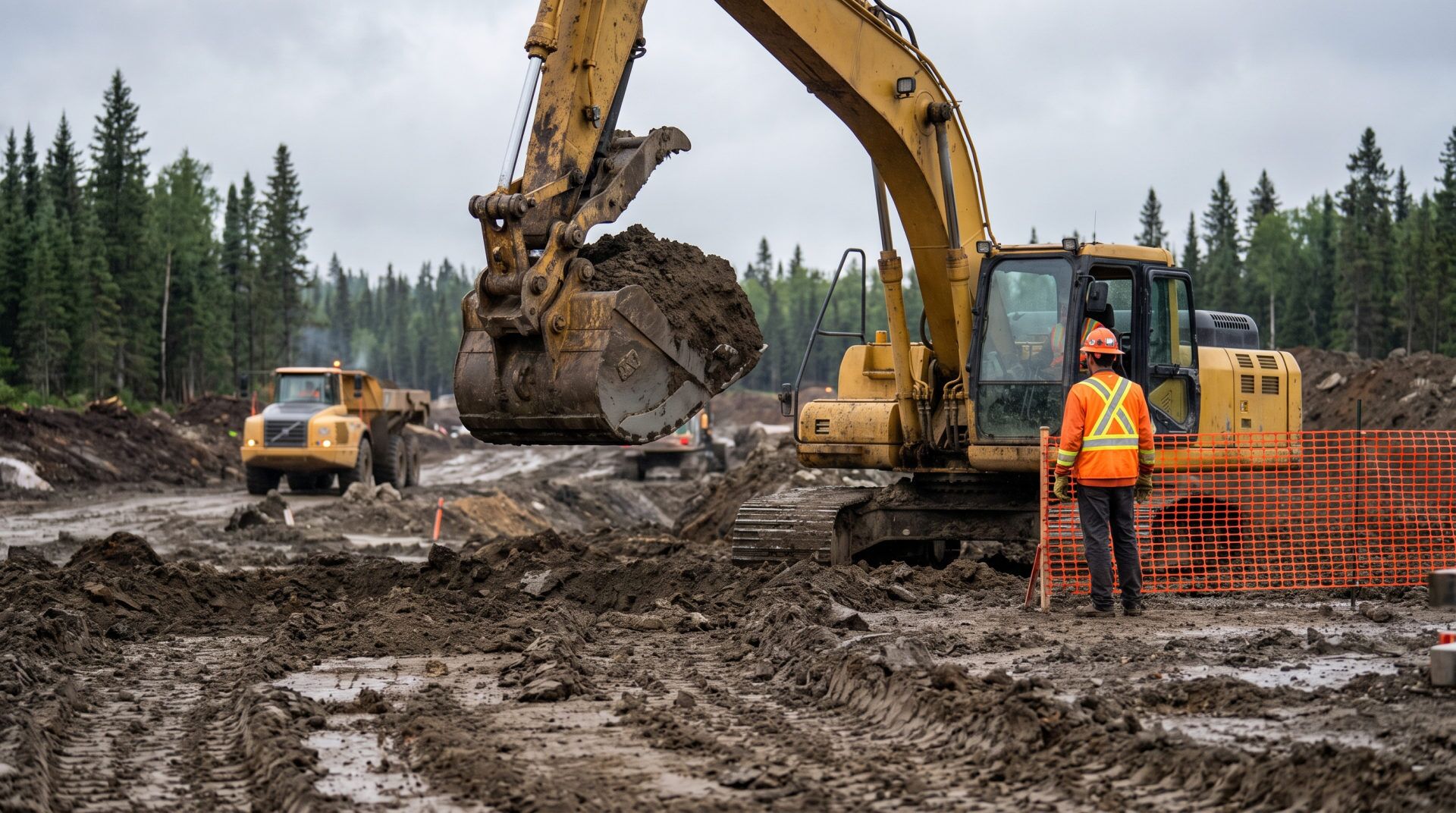
Excavators, dozers, and haul trucks move massive amounts of material fast, and that power makes them dangerous to anyone sharing the same ground. This earthmoving equipment training course gives operators and ground workers the awareness they need to read a machine’s blind spots, anticipate swing zones, and act before a struck-by incident or rollover becomes a fatality.
Designed for anyone who operates earthmoving equipment or works on foot near it, the course covers equipment types, buried utility hazards, Canadian weather conditions, and the daily defences that keep a site running safely. You finish with a certificate of completion and a clear set of on-the-job actions you can apply the next shift.
Course Overview
This earthmoving equipment safety course is organized into focused learning modules that move from machine identification through to daily site defences. The modules are:
- Earthmoving Equipment and the Work It Does
- Rules, Roles, and Responsibilities
- Struck-By Hazards and Visibility
- Rollover, Tip-Over, and Ground Hazards
- Working Around Utilities
- Caught-Between, Access, and Maintenance Hazards
- Working in Canadian Conditions
- Everyday Defences: Inspections, PPE, and Communication
Each module connects a specific hazard to the control measure that addresses it, so by the time you reach the daily-defences content, you can already tie a struck-by risk to a concrete response.
The course runs entirely online and takes 60 minutes to complete. You can assign it before a new project phase, a site orientation, or a seasonal changeover without pulling workers off site.
Awareness that travels with the worker, not just the site.
What You’ll Learn
The course builds your ability to recognize and respond to the hazards that cause the most serious earthmoving incidents.
Equipment types and hazard profiles
Identify the main types of earthmoving equipment, excavators, dozers, loaders, graders, and haul trucks, and the signature hazard associated with each machine type. Recognize how each machine’s design creates specific danger zones that differ from one equipment type to the next.
Struck-by and visibility hazards
Recognize blind spots, swing zones, and other struck-by hazards that exist around operating machines. Describe how a machine’s size and operating speed affect the distance a ground worker needs to maintain to stay outside the danger zone.
Rollover and ground stability
Describe how rollovers happen and how ROPS and seatbelts protect operators when a machine tips. Identify ground conditions, soft fill, slopes, and proximity to excavation edges, that increase rollover and tip-over risk.
Utilities and buried services
Explain the locate-and-daylight process for working near buried utilities before any ground disturbance begins.
Canadian conditions
Recognize how Canadian weather changes ground conditions and visibility across seasons, and identify the site-specific risks those changes create.
Everyday defences and stop-work authority
List the everyday defences that keep an earthmoving site safe, from pre-shift inspections to PPE selection and communication protocols. Identify when conditions require you to stop work and escalate to a supervisor or competent person.
Assessment and completion
Demonstrate the required knowledge by passing the course assessment at 80% or higher to receive your certificate of completion.
Know the machine. Know the ground. Know when to stop.
Who Should Take This Course?
- Equipment operators who run excavators, dozers, loaders, graders, or haul trucks and need to recognize the hazards their own machine creates for others on site.
- Ground workers and labourers who work on foot in active earthmoving areas and must know how to read machine movement and stay out of blind spots and swing zones.
- Site supervisors and forepersons who coordinate foot traffic and machine activity and need a shared hazard vocabulary with their crews.
- New hires and site orientees entering a construction, mining, or site-work environment for the first time and requiring baseline earthmoving awareness before starting work.
- Safety officers and health and safety coordinators building or auditing earthmoving safety programs who need a consistent, documented training baseline for their teams.
- Contractors and subcontractors whose workers share ground with earthmoving equipment on projects where they do not control the equipment directly.
Why Take This Course?
Earthmoving machines are the leading source of site fatalities. These machines are large, fast, and operate with blind spots that can swallow a person entirely. The hazard is not carelessness, it is the gap between machine capability and worker awareness.
A ground worker cannot avoid a hazard they cannot see. Workers who have never been shown where a swing zone ends or what soft ground looks like before a rollover cannot protect themselves. This earthmoving equipment course closes that gap before an incident opens it.
Canadian conditions change the risk profile monthly. Frozen ground that thaws unevenly, reduced winter visibility, and seasonal soil-stability shifts alter site hazards in ways that generic training content does not address. This course covers those conditions directly.
Your training record must prove the worker was equipped. When an incident is investigated under provincial OHS legislation, a documented certificate showing an 80% pass on earthmoving hazards demonstrates that you gave your worker the knowledge to make safe decisions. That record matters.
Key Benefits
- Certificate of completion included. Workers who pass at 80% or higher receive a printed-ready certificate they can submit to a supervisor, safety file, or project record.
- Struck-by and rollover hazards identified before they cause harm. You leave the course able to name the specific blind spots and ground conditions that can precede some of the most serious fatal earthmoving incidents.
- Sixty-minute online format, no travel required. The course fits a pre-shift window, a lunch break, or a project onboarding session, with no site departure needed and no scheduling overhead for your team.
- Hazard knowledge that applies across equipment types. Because the course covers excavators, dozers, loaders, graders, and haul trucks, your awareness carries across machine types and project sites without retraining.
- Flat $99.99 per-learner price. You budget the cost precisely per head, with no subscription or seat minimum, making it straightforward to assign across a crew of any size.
If you manage training records across multiple workers or sites, BIS Training Record Management lets you store and retrieve completion certificates in one place.
Course Details
- Duration: 60 minutes
- Format: Online, self-paced
- Pass mark: 80%
- Certificate: Certificate of completion included
- Price: $99.99 per learner
Frequently Asked Questions
How long does the Earth Movers earthmoving equipment training course take to complete?
The Earth Movers course takes 60 minutes to complete. You can finish it in a single session without leaving your job site.
What score do I need to pass the Earth Movers course?
You need 80% or higher on the final assessment to pass and receive your certificate of completion.
Is a certificate included when I complete the earthmoving equipment safety course?
Yes, the Earth Movers (CAN) course includes a certificate of completion for every learner who passes the assessment at 80% or higher.
Who should take this earthmoving equipment training course?
The course is built for anyone who operates earthmoving equipment or works on foot near it. Equipment operators, ground workers, site supervisors, safety coordinators, and contractors all benefit.
Does this course cover Canadian-specific conditions and hazards?
Yes, a dedicated module addresses how Canadian weather affects ground conditions and visibility across seasons, making the content directly applicable to Canadian construction and mining sites.
How much does the Earth Movers online course cost?
The Earth Movers (CAN) course is priced at $99.99 per learner.
Enrol in the Earth Movers (CAN) earthmoving equipment training course today and give your operators and ground workers the hazard awareness they need before the next shift starts.
Course Details
Course Length
This course will take roughly 60 minutes
Passing Mark
To pass this training course, you need to score 80% or higher on the quiz
Certificate
Upon the successful completion of this course a certificate with your name will be stored on your profile and available to print
Additional Training Courses

GHS Safety Data Sheets in Construction Environments
This web-based course titled GHS Safety Data Sheets in Construction Environments provides an in-depth review of the contents and structure of GHS Safety Data...
Cultura de reporte temprano
Inscríbete en este curso para aprender cómo tu organización puede establecer una cultura de reporte temprano para potenciar el rendimiento de la seguridad. Al...
HIPAA Rules and Compliance
The HIPAA Rules and Compliance online course provides a thorough understanding of the key HIPAA terminologies, elaborates on the regulations and highlights the responsibilities...