Free webinar, Nov 25: Practical AI in Safety with Ashley Mckie. Save your spot →

BIS Safety Software
Boom Truck (CAN)
Learn boom truck safety in this 120-minute online course for Canadian workplaces: telescopic vs knuckle boom trucks, hazards, roles and competency, inspection, setup and stability, load charts, lift planning and emergency procedures. Earn a certificate when you pass.
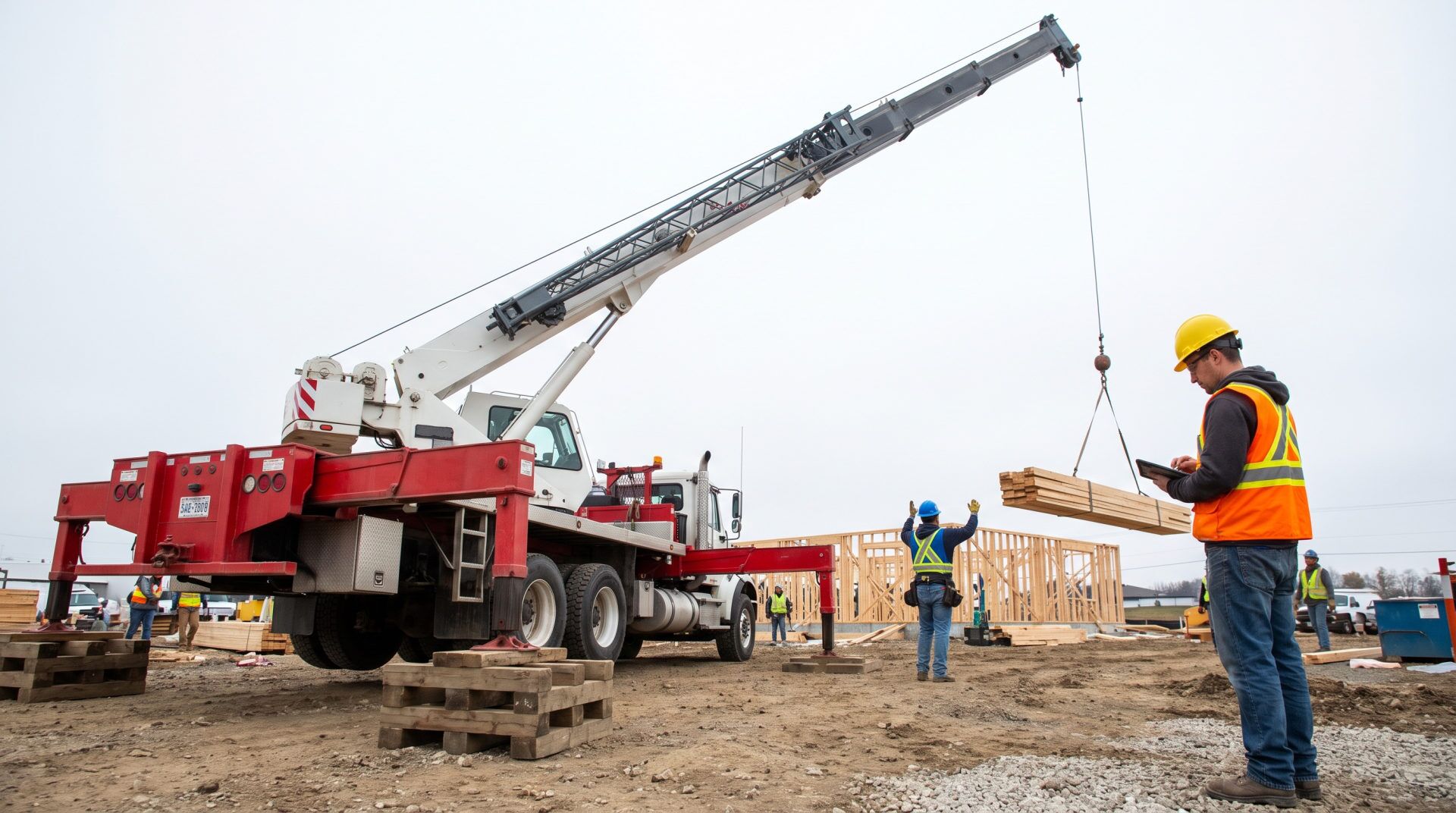
Boom truck operations carry real consequences when something goes wrong. Tip-overs, powerline contact, and falling loads are among the most serious incidents on Canadian job sites. This boom truck training course gives you the foundational knowledge to plan lifts safely, set up equipment correctly, and respond when conditions change.
This online boom truck safety course covers equipment fundamentals, pre-operational inspection, load chart reading, and emergency procedures. Whether you operate the truck, work in the lift zone, or approve the lift plan, you need to know what a safe setup looks like before the hook goes up.
Course Overview
This boom truck training course is built around learning modules that cover the full scope of safe boom truck operations, from equipment basics to post-incident response. Each module addresses a distinct phase of the work:
- Boom Truck Fundamentals
- Telescopic vs. Knuckle Boom Trucks
- Major Hazards
- Responsibilities, Roles, and Competency
- Applicable Safety Standards and Legal Requirements
- Pre-Operational Inspection
- Setup and Stability
- Load Charts and Lift Planning
- Rigging Safety Awareness
- Safe Operation
- Emergency Procedures
The course opens with equipment knowledge. You learn what boom trucks are, how the two main configurations differ mechanically, and where each type is deployed across construction, utility, and delivery work. From there, the course moves into the hazards and role expectations that govern every lift.
The middle modules shift to hands-on application. You work through pre-operational inspection steps, outrigger and cribbing configuration for a stable setup, and load chart reading that accounts for exclusion zones and communication roles.
The final modules address the moments that test a crew most: recognizing an unsafe condition in real time, applying rigging safety principles, and following emergency response procedures when a lift goes wrong.
Inspection, setup, lift planning, and emergency response are all covered.
What You’ll Learn
This boom truck safety course grounds every outcome in a task you perform or a decision you make on an active job site.
Hazard identification and site awareness
- Identify the major hazards associated with boom truck operations, including tip-overs, powerline contact, falling loads, and struck-by incidents.
- Recognize when site or equipment conditions have become unsafe and apply the appropriate stop-work response.
Equipment inspection and readiness
- Perform basic pre-use inspections on a boom truck and identify conditions that make the unit unfit for operation.
- Describe the mechanical differences between telescopic and knuckle boom configurations and explain how each affects operational limits.
Stability, setup, and outrigger configuration
- Explain how stability, leverage, and outrigger placement interact to create or reduce tip-over risk.
- Apply safe setup practices, including the correct use of cribbing and outrigger pads, on varied ground conditions.
Lift planning and load management
- Apply lift planning basics, including load awareness, exclusion zone establishment, and the communication roles that keep a lift coordinated.
- Describe safe operating practices that prevent struck-by injuries and dropped loads during active lifting.
Rigging and load control
- Recognize rigging safety principles and identify conditions that indicate a rigging arrangement is unsuitable for the planned lift.
Assessment and completion
- Demonstrate course completion by achieving the 80% pass mark on the final assessment.
- Receive a certificate of completion as a documented record of your boom truck training.
Every outcome maps to a task you perform or a decision you make on an active job site.
Who Should Take This Course?
- Boom truck operators who set up, operate, or spot a boom truck and need documented, Canadian-standard training to back their on-site decisions.
- Construction site workers who work in or around active lifting zones and need to understand exclusion zones, communication roles, and struck-by hazards.
- Utility and telecom field crews who use boom trucks for overhead work and must recognize powerline contact risks and safe positioning requirements.
- Material delivery personnel who operate or work alongside truck-mounted cranes during load placement and need to apply lift planning and rigging awareness on the job.
- Site supervisors and lift planners who approve or oversee boom truck operations and need a working knowledge of load charts, stability factors, and role responsibilities.
- Safety coordinators and trainers who are building or auditing a boom truck safety program and need a structured, certificate-bearing course to include in their documentation.
Why Take This Course?
Boom truck incidents are severe and preventable: tip-overs, powerline strikes, falling loads, and struck-by events shut down sites and put workers in hospital. The right knowledge and preparation change that outcome.
The gap shows up in the field. A worker who cannot read a load chart, configure outriggers correctly, or spot an unsafe rigging condition is not equipped to make the calls that keep a lift from becoming an incident.
Canadian worksites operate under specific safety standards, including provincial OHS acts and CCOHS guidelines. This course is built with those standards in mind, giving workers and organizations a training record that reflects the regulatory environment they actually work in.
A lift is a team operation. Boom truck safety can depend on everyone in the lift zone knowing their role: who plans the lift, who signals, who calls a stop. This course addresses those responsibilities directly, not as a footnote.
Key Benefits
- Certificate of completion on passing. You receive a shareable credential to add to your training file, and supervisors can reference it during site audits or pre-job reviews.
- Covers the four highest-consequence boom truck hazards. Tip-overs, powerline contact, falling loads, and struck-by incidents are the events that cause fatalities and trigger site shutdowns.
- Complete the full course in 120 minutes. The format is structured for a single sitting so you finish boom truck operator training without losing a full day of site time.
- Skills apply across telescopic and knuckle boom configurations. You may not need retraining every time the equipment on site changes, because both main configurations are covered in one course.
- Priced at $99.99 per enrolment. Organizations get a fixed, per-seat cost they can budget and track without variable instructor or travel fees.
Course Details
- Duration: 120 minutes
- Format: Online, self-paced
- Pass mark: 80%
- Certificate: Certificate of completion included
- Price: $99.99
- Jurisdiction: Built for Canadian workers
Frequently Asked Questions
How long does the boom truck training course take to complete?
The boom truck training course is 120 minutes in total, designed to be completed in a single sitting. You do not need to schedule multiple sessions.
What score do I need to pass the boom truck course?
You need 80% on the final assessment. Workers who meet that mark receive their certificate of completion.
Is a certificate issued when I finish the boom truck course?
Yes, the Boom Truck (CAN) course includes a certificate of completion for every learner who achieves the 80% pass mark. You can add it to your training file or share it with your supervisor.
Who should take this boom truck safety course?
This boom truck safety course is designed for operators, site workers, utility crews, delivery personnel, supervisors, and safety coordinators who work with or around boom trucks on Canadian job sites.
How much does the boom truck online course cost?
Enrolment is $99.99 per learner, with no additional instructor or travel fees.
Does this course cover both telescopic and knuckle boom trucks?
Yes, the course addresses both main boom truck configurations, including how their mechanical differences affect operational limits and safe setup requirements.
Enrol in the Boom Truck (CAN) online safety course today and give your crew the documented, Canadian-standard training they need before the next lift.
Course Details
Course Length
This course will take roughly 120 minutes
Passing Mark
To pass this training course, you need to score 80% or higher on the quiz
Certificate
Upon the successful completion of this course a certificate with your name will be stored on your profile and available to print
Additional Training Courses

Comunicación de riesgos – Etiquetas (US)
La meta del GHS es mejorar la calidad y uniformidad de la información proporcionada a trabajadores, empleadores y consumidores de productos químicos mediante un...
Food Handling Safety
Our Food Handling Safety course delves into the dangers of contamination linked to food processing, shedding light on the tools, materials, and safety procedures...
Self-Evaluator Online
The Self-Evaluator training course is essential for fulfilling a SECOR with AMTA. This training program will equip you with necessary knowledge and tools to...