
- Home
- Company Spotlights
- If It’s Not on Paper, It Didn’t Happen
If It’s Not on Paper, It Didn’t Happen
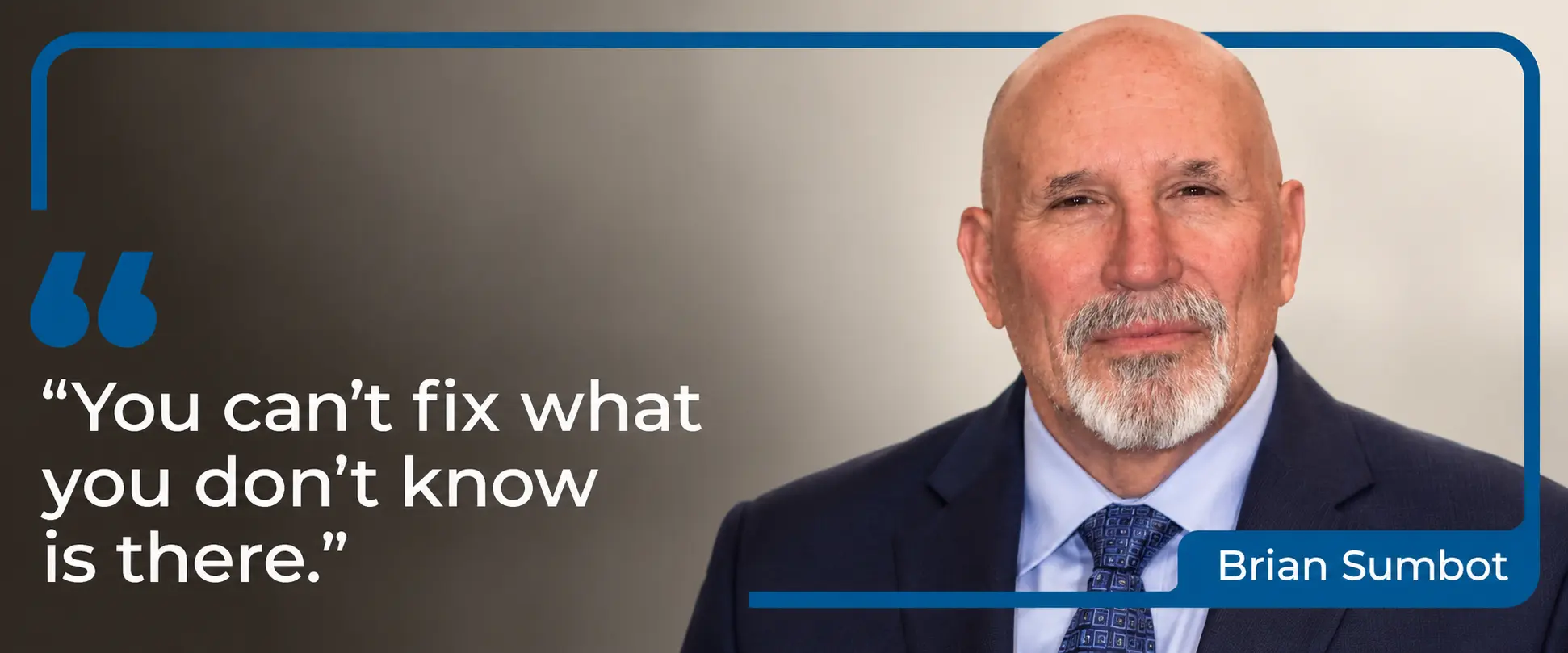
Brian Sumbot, who went from drilling rigs to teaching safety around the world, on the risk assessment step people skip and why knowing a procedure isn’t enough.
In 2008, after a fatality on a drilling operation, Brian Sumbot was invited to Yemen to provide safety support. He wasn’t a safety person yet, but he says he was asked “because I had a lot of experience on drilling rigs and I understood the hazards,” and that trip is where his safety career began.
That experience came from years on the rigs, which he left when he got married, because “drilling rigs and marriage don’t mix too well.” He went to college, became a petroleum engineering technologist and spent years in project management for oil companies. After Yemen he earned his NEBOSH certification and started teaching it, and he figures he went around the globe four or five times delivering training before COVID moved most of it online.
These days he works from an acreage near Lethbridge, Alberta, where six of his grandchildren live on the same property. He tutors NEBOSH students for RRC, a UK training provider, has taught at what is now Lethbridge Polytechnic, and holds tech membership in IOSH, the UK body for safety professionals. Next up is a practitioner certification in operational excellence, about seven modules away.
Risk management isn't rocket science
Brian has been married close to 39 years, and he uses the marriage to make a point. Did he assess the hazards and consider the risks along the way? “You bet I did.” Did he see them all? “No, not in your wildest dream.” Everyone runs assessments like that without calling them one, and in his view “safety and risk management isn’t rocket science. It’s intuitive.”
He saw the same thing on the rigs, long before he held a safety title, when “I was exercising safety principles and we’re all doing it.” Teaching the NEBOSH International General Certificate, which covers general safety rather than one industry, confirmed it for him. “The reality is safety is safety,” he says.
The step everyone forgets
Brian teaches risk assessment in five steps. Identify the hazard, then work out who could be affected and how. Assess the risks, rank them from highest to lowest and develop controls to minimize or eliminate them. The fourth step, which he calls “the most important one that everyone forgets to pay attention to,” is to record it.
A good lawyer once told him that if it’s not on paper, it doesn’t exist. Brian’s own reason is that “you can’t fix what you don’t know is there.” Once the assessment is written down, people get trained on the controls. The fifth step is checking that those controls work and going back to the start if they don’t. He teaches the whole thing as plan, do, check, act, because “it’s a constant cycle.”
Where competence comes from
Brian has taught CRSPs and other professionals with deep academic knowledge, and he separates what someone knows from what they can do. “There’s a difference between knowledge and competency.” Knowledge is the starting point, but “you need to harness that knowledge to practical hands-on experience,” and nobody is competent until they have both.
His own Yemen invitation came from years of doing the work. The same idea sits behind the motto in his email signature, “safety doesn’t happen by accident, it happens on purpose.” He says it because “you don’t really comprehend it until you use it and do it.”
The stories people listen to
Asked what makes a safety story people pay attention to, Brian starts with listening to the person who lived it. He is less hopeful about how the industry learns. “Unfortunately, it’s the blood culture that gets your attention.” His example is Piper Alpha, the 1988 North Sea platform disaster, which he calls “an impetus for the building of safety management systems.”
He thinks those lessons “can be best described by the people who tell those stories,” and he is working with one of those people now. Scotty, a new member of his team, is a butcher by trade from Scotland who lost three fingers in an incident at a meatpacking plant in Edmonton, and Brian is helping him build a career as a keynote speaker.
Ask Brian what he would do differently if he were starting out and he’ll ask if you have three weeks. “Hindsight is always 20/20,” he says, and in his view most of what anyone learns comes from mistakes, ideally ones they don’t repeat. He still teaches the habits he picked up on the rigs before anyone called him a safety person. Spot the hazard, then write it down so somebody can fix it.
Stay up to date with the latest spotlight articles, podcasts, SafetyNET Magazine, and our book on Leadership for Safety Excellence. Follow along on LinkedIn for new conversations each week.