
Stay Compliant and Confident When Handling Hazardous Materials
Every workplace uses products that come with built-in risks, from cleaning agents and compressed gases to chemical reagents and lab materials. Canada’s Workplace Hazardous Materials Information System (WHMIS) is what communicates those hazards to prevent them from causing harm. WHMIS outlines how materials are classified, labelled, and documented so that everyone, from frontline workers to supervisors, can interpret risks and act safely.
When workers are new to the workplace, or even the whole workforce on a wider scale, full WHMIS training gets them up to speed on all the ins and outs of the system.
But for the workers who are already pros? Full retraining isn’t always necessary or the best use of time. That’s why we’ve developed a WHMIS refresher workers can take in less than half an hour.
A WHMIS refresher reinforces employees’ abilities to recognize hazard information, apply controls with confidence, and communicate safety data clearly when handling or working near hazardous products.
What is WHMIS?
Let’s go back to the basics. WHMIS is Canada’s national hazard communication standard. It connects every product to the information workers need to handle it safely. You’ll find WHMIS labels on things like:
- Propane tanks
- Cleaning products and bleaches
- Rust removers and descalers
- Degreasers
- Antifreeze
- Aerosol lubricants (such as WD-40)
These are just a few examples of products that use WHMIS to communicate their hazards at work.
It’s also important to note that not every product uses WHMIS. For example:
- Products meant for use at home
- Products that are regulated through other means (for example, nuclear materials or explosives)
It’s vital to know the rules and regulations that control the items that are used in your workplace, whether they fall under WHMIS or otherwise.

How Often do Workers Need to Take WHMIS?
In Canada, there’s no single national rule that says exactly how often workers must take WHMIS training, but there are clear expectations under federal and provincial legislation.
- When the workplace uses new products
- When new product or hazardous information is available
- As needed
So, if you’re introducing a new cleaning product, or find that workers are struggling to recall the pictograms, it’s time for WHMIS training.
Some provinces or territories outline additional requirements for WHMIS training. For example, in Alberta and Ontario, it’s recommended to take WHMIS refresher training every 1 – 3 years.
Always check what applies to you and your workplace.
Hazard Groups and Pictograms: Turning Symbols into Action
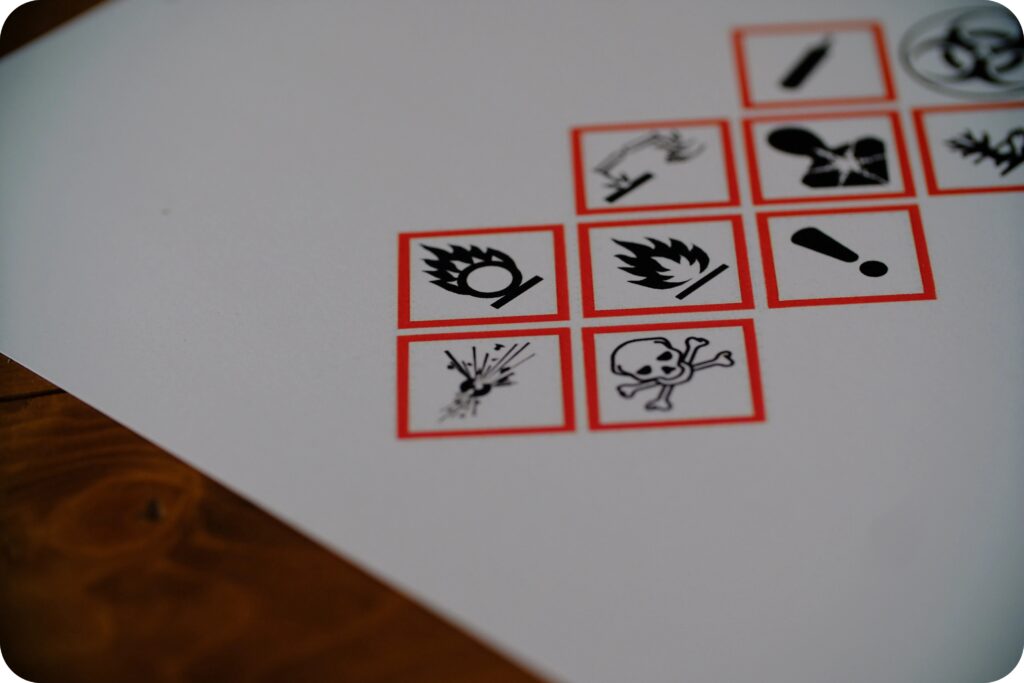
In our refresher training, one of the important topics covered is hazard groups and pictograms. WHMIS organizes hazardous products into two main groups: physical hazards and health hazards. Each class within these groups is paired with a pictogram to make hazard recognition quick and easy. The goal is for workers to recognize the symbol and translate it into safe action, without hazards being lost to language barriers or reading levels.
Workers should be able to:
- Recall what each pictogram represents at a glance
- Compare hazard classes to gauge which products pose higher risks
- Apply that awareness to how they handle, store, or dispose of materials
See the flame pictogram? That’s your signal to check for ignition sources before starting work. Spot a skull and crossbones? It’s time to tighten up controls and PPE. These visuals are cues for real-time decision-making that protect people and property.
Labels: Quick Clarity When It Counts
Next, we cover labels. Labels are the first line of communication in WHMIS, and every container must display one.
A supplier label is the detailed version: seven pieces of information presented in both English and French, from product name to hazard statements.
A workplace label is simpler with just three core elements: product name, safe handling instructions, and a reference to the Safety Data Sheet (SDS). These appear when products are transferred to smaller containers, made on-site, or when the supplier label becomes damaged.
For workers, the process is straightforward but essential: read, interpret, and follow. Every label is a safety conversation in print.

Safety Data Sheets: The Story Behind the Symbol
If the label is the headline, the Safety Data Sheet (SDS) is the full story. Each SDS includes 16 standardized sections that go beyond surface warnings and cover everything from firefighting and spill procedures to toxicological and ecological effects.
No one expects workers to memorize every detail. What matters is the ability to locate, interpret, and apply the right section when it counts. In an emergency, finding first aid or firefighting measures quickly can make the difference between a close call and a catastrophe.
An SDS is a tool of empowerment. It gives workers the context to make informed choices about controls, PPE, and response actions. When used properly, it turns technical data into practical safety decisions.
Full Training or Refresher?
For new hires or workplaces introducing new materials, full WHMIS training covers the system from end to end. But for seasoned workers who already apply these principles every day, a refresher makes more sense.
Our WHMIS Refresher Course takes about 25 minutes: enough time to reinforce essential skills, highlight the latest regulatory updates, and confirm that workers can still recognize, interpret, and respond to hazard information with confidence.
It’s a faster, focused way to stay compliant, competent, and ready for inspection without sitting through the basics again.
Keep safety top of mind. Keep compliance simple.
Take BIS Safety Software’s WHMIS Refresher Course to keep your team sharp, informed, and compliant.
Avez-vous des employés francophones?
Nous offrons aussi le cours SIMDUT en français!
Related Articles

Chris Vienneau of Clark Builders explains how crews are trained to spot the hazards that could kill them, sharing lessons...

Discover Brian’s approach to workplace safety, from identifying hazards and documenting risks to building practical competence and learning from real-life...
Jason Ross of Bird Construction shares how a panic attack on a winter highway in northern Manitoba led him to...