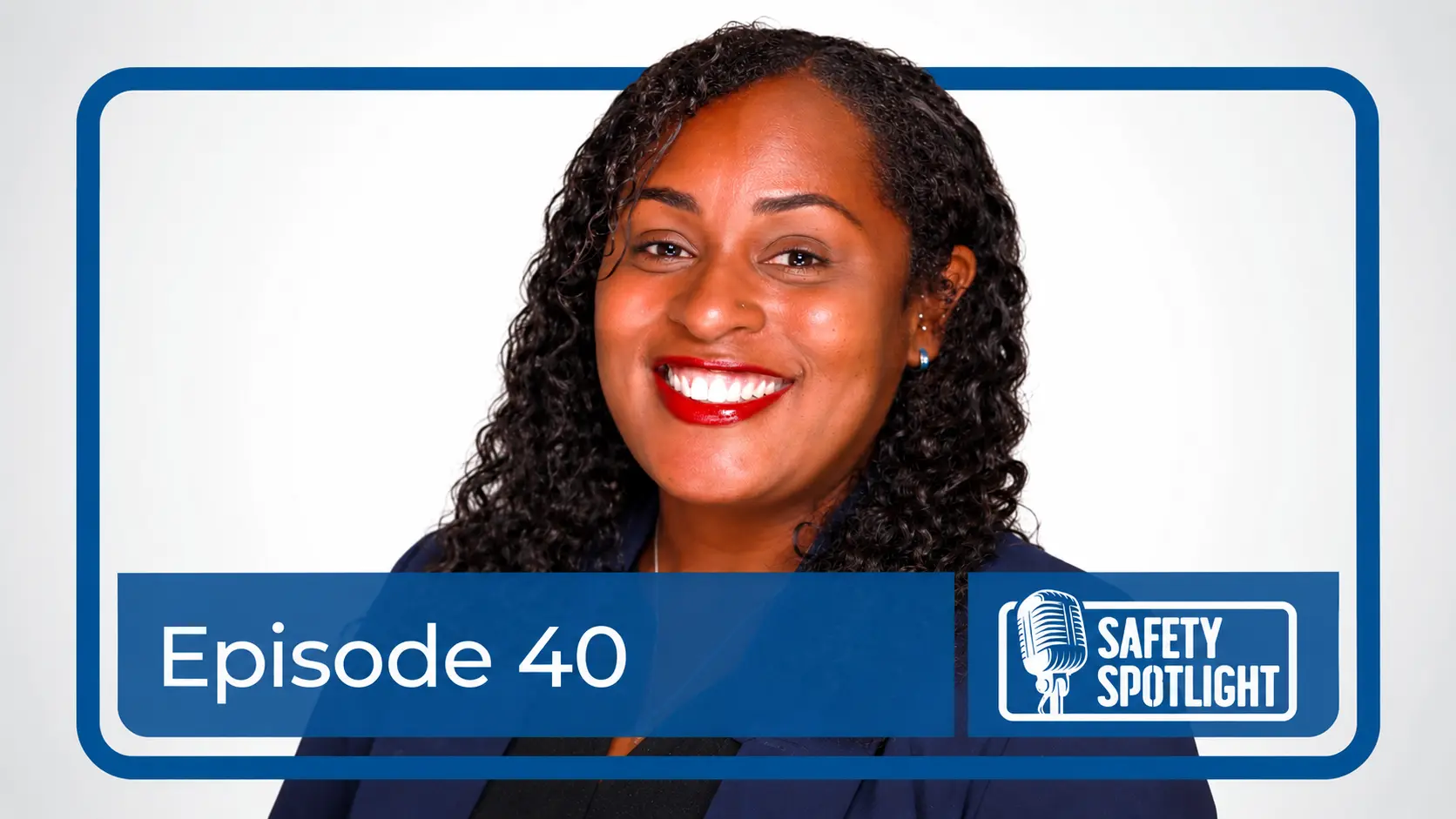
Ask most safety pros where their program starts and they’ll point to a form. Nicole Wetsch works in a place where the emergency starts first and the paperwork has to catch up.
Nicole didn’t come to safety the usual way. She started in medical microbiology and nanotechnology research, running labs and building programs for institutes across the country, before bringing that scientist’s discipline to the Edmonton Police Service. Today she leads occupational health and safety for one of the least prescriptive environments in the field, a place with no ISO standard for the work in front of her. She calls her team safety unicorns: OHS professionals in a world of construction sites and oil fields, applying the fundamentals of the profession to warrants, patrol cars, and split-second decisions.
In this episode of The Safety Spotlight, Nicole joins us to unpack why a traditional hazard assessment falls apart the moment the work turns unpredictable, why the people most focused on protecting others tend to be the worst at protecting themselves, and how a research background became her edge in making the case for change. She argues that a safety program is only as strong as whether people actually use it, and that focusing on the people rather than the paperwork is what earns the credibility to shift a culture.
What we get into:
The People Who Forget Themselves: Officers run toward the danger the rest of us run from. Nicole talks about the challenge of getting a risk-tolerant group to slow down and think about their own safety, not just the people they are trying to help.
Functional Beats Thorough: A patrol officer’s hazard assessment could run 200 pages, and it would sit unread. Nicole explains why safety that isn’t usable isn’t safety, and what a field-level hazard assessment looks like when it becomes a mission plan instead of a checklist.
A Scientist’s Answer to Fentanyl: When fentanyl was still a new and poorly understood threat, Nicole borrowed control banding straight from her nanotechnology research to protect officers, well before there was a provincial directive telling her she could.
Built for Women, Better for the Whole Team: Thirty-plus pounds of gear on a duty belt lands differently on different bodies. Nicole shares how designing PPE that actually fits, from padded belts to external vests, tends to raise safety for the entire membership.
It’s the Situation, Not the Suspect: Officers are trained to find who did something wrong, which makes root cause analysis a hard habit to build. Nicole explains how moving from paper to online reporting helped separate the incident from the individual, and why the corrective actions got better as a result.
If you build safety programs, run a frontline crew, or carry responsibility for getting people home safe, this conversation will challenge how you think about what makes safety functional, credible, and worth the paper it’s written on.