
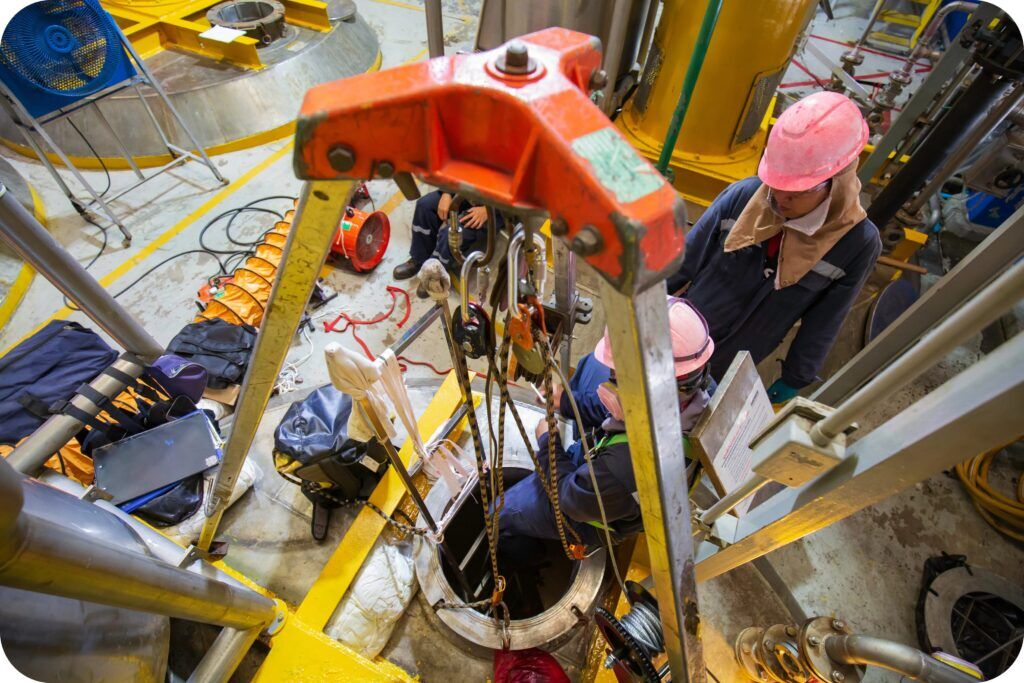
When it comes to workplace hazards, confined spaces stand apart. These spaces pose their own hazards and they also increase other risks, from toxic atmospheres to hot work. The moment a worker steps across that entry plane, every movement demands precision, preparation, and teamwork. Safe confined space entry is a system built from trust, planning, and well-rehearsed control measures.
What is a confined space?
Before anyone enters a confined space, everyone needs to be on the same page about what they are. A confined space isn’t just “tight.”
Under Canadian Occupational Health and Safety Regulations, a confined space is:
- Fully or partially enclosed
- Not meant for continuous human occupancy
- Designed with limited or restricted entry or exit
This means that tanks, silos, trenches, and sewers are confined spaces, along with anything else that meets this definition.
Both the setup of the space (for example, poor ventilation or a blocked exit) and materials in the confined space (such as water, grain, fumes, or gases) can turn routine work into a crisis within minutes.
That’s why each confined space in the workplace must be identified, marked, and then assessed before anyone crosses the plane of entry. Each province and territory also has its own additional confined space requirements.

Who is involved in confined space entry?
Safety is a team sport. Every safe entry relies on four roles, each essential and non-negotiable:
- The employer
- The entrant
- The attendant
- The entry supervisor
Let’s look at the responsibilities for each role more closely.
The Employer creates and maintains the confined space program. This means they’re involved in identifying hazards, establishing permits, and ensuring training and rescue readiness.
The Entrant is the worker or who physically enters the confined space. There may be one or multiple entrants. Entrants are required to be fully trained, equipped, and fit for duty. Throughout the entry, they maintain constant communication and must exit at the first sign of distress or alarm.
The Attendant is the person who stays outside the confined space and ensures the safety of the entrants. An attendant must never enter the confined space, no matter the circumstances. While the entrant works, the attendant is the one who maintains communication, monitors conditions, records data, and initiates rescue if something goes wrong. This person might also be called a monitor or tending worker.
The Entry Supervisor oversees the entire process, verifies controls, and halts the entry if conditions shift.
This structure provides protection. Each role closes a gap the others can’t see, forming a continuous chain of accountability that keeps workers alive.
What is a confined space entry permit?
A confined space entry permit is the legal and procedural heart of the operation. It ensures no assumptions are made and no steps are skipped.
A complete permit includes:
- Date, time, and expiry
- Hazard identification and controls
- Atmospheric testing
- Emergency contacts and rescue procedures
In the confined space entry, the permit is the law. If conditions change or work reaches the expiry time, that means the entry is no longer authorized. Workers must exit the space, and the supervisor must fill out a new permit before confined space work can continue.
Once reviewed and signed, the permit must stay posted at the entry point. It’s both a checklist and a communication tool, proving that the team has taken every required step to make the entry as safe as possible.
How to control confined space hazards
Confined space hazards come in layers: toxic gases, extreme temperatures, engulfment, machinery, fatigue, even noise. To manage them, crews apply the hierarchy of controls:
- Élimination: Can the work be done without entry, such as by using remote tools?
- Substitution: Can hazardous materials or processes be replaced with something safer, like trading hot work for cold work?
- Engineering Controls: Use ventilation, barriers, monitoring systems
- Administrative Control: Ensure crews are properly trained, spaces are marked, and permits are filled out correctly
- EPI: As the final barrier (never the first choice) use equipment like respirators and retrieval harnesses to protect workers
For atmospheric hazards in particular, continuous monitoring is non-negotiable. Gases like H₂S settle low, while methane rises high. A clear reading at one level means nothing if another layer hides danger, especially when working in a confined space can stir up the atmosphere. To prevent being exposed to dangerous gases, teams must test multiple levels of the confined space before, during, and after entry.

How to prepare for confined space incidents
The most tragic confined space incidents often share one detail: the rescuer becomes the next victim. According to the Canadian Centre for Occupational Health and Safety, 60% of confined space deaths in Canada involve would-be rescuers.
Rescue readiness means planning for all three scenarios:
- Self-rescue: the entrant exits at the first sign of trouble
- Non-entry rescue: a lifeline or winch allows an entrant to be rescued without additional workers entering the space
- Entry rescue: as a last resort, a trained team equipped with proper PPE enters to perform a rescue
Employers must confirm rescue capability before any work begins (whether through an internal team or a third-party service) and document that readiness in the permit. No rescue plan, no entry.
Never enter a confined space if safe rescue isn’t possible.
Building a culture of safety
Safe confined space work is so much more than memorizing rules. Workers, supervisors, and employers must continuously evaluate and be prepared to respond to changing conditions. Each task must be evaluated for new factors and controls always need to be applied systematically. Communication is also vital to confirm the whole team is aware of what’s happening and ready to respond when needed.
The best confined space teams create safety through every decision. They recall the hazards, analyze past incidents to prevent future ones, and assess working conditions in real time.
Ready to strengthen your confined space program?
Notre Confined Spaces Safety course empowers employers, supervisors, and works to act with clarity, confidence, and control where it matters most.
Articles connexes

Chris Vienneau, de Clark Builders, explique comment les équipes apprennent à repérer les dangers qui pourraient les tuer, et partage ses leçons sur les...

Discover Brian’s approach to workplace safety, from identifying hazards and documenting risks to building practical competence and learning from real-life...
Jason Ross, de Bird Construction, raconte comment une crise de panique sur une route enneigée du nord du Manitoba l'a amené à parler ouvertement de la santé mentale des hommes, et ce qu'il faut pour amener cette conversation sur les chantiers du pays.